About Me

My photo
Hi, this is somebody who has taken the quieter by-lane to be happy. The hustle and bustle of the big, booming main street was too intimidating. Passing through the quieter by-lane I intend to reach a solitary path, laid out just for me, to reach my destiny, to be happy primarily, and enjoy the fruits of being happy. (www.sandeepdahiya.com)

Friday, November 17, 2023

A smart worker

 She is short, chubby, dark, funny-featured with a clearly discernible moustache. My niece has fever and we are sitting in the waiting hall of a hospital at the town. There are dozens of patients on the steel chairs. She carefully scans the scene. A smart hunter who knows whom to approach without dicing with danger too much. The target is locked. A struggling countryside writer is most eligible to be hunted. She reaches me, wincing with pain, looking like someone in urgent need of medical attention. ‘Can you please give me fifty rupees?’ she asks. ‘Are you running short of money for the doctor’s fee?’ I ask with full sympathy and complete bookishness.

Writers are very imaginative so my imagination saves her from the trouble of explaining her woes. With my fragilely inflated sense of pity, I see myself opening my wallet and giving her fifty rupees. She waits for three or four minutes then gets up with an effort. ‘I think the doctor will take some time to arrive so in the meantime I can take some fresh air outside. It’s suffocating here,’ she informs me. I shake my head mutely. After all she looks so confident about her act. She goes out, never to return. Well, she will of course return but not till we are supposed to be here.

All I can say is that begging is getting improvised. Poverty is always busy in the act of fervent procreation of miseries for those falling in its grasp. She has to be innovative. The business rivalry is picking up. Attractive, scent-laden, panoramic transgenders with tight-fitting jeans, gaudy shirts, colored hair, luscious red lips and jutting pointed bust—a bubbly assemblage carrying starry ambience—get far more in alms than dirty mothers with malnourished infants suckling their dry breasts. True tears and silent screeches hardly sell in the market of alms and charity. It has turned plaintively exasperating having run its miserable course over the centuries. The real show of genuine poverty is a prodigious waste in eliciting emotions these days. Maybe it has become too normal, a routine thing to see stray dogs and dusted, dying humans by the pavements.

But I reckon this sweet imp has plenty of skills to survive in the game where the dogs of hunger are perpetually preying upon those without a roof over their head. 

Thursday, November 16, 2023

A thunderstorm

 A terrible spell of thunderstorm and rain struck on the evening of May 29. Despite all the sandy howls preceding the raindrops it’s a blessing against the heated furnace. These pre-monsoon showers save us from getting baked like desert sands. Sometimes they are soothing, breezy with a fine drizzle’s courteous verve; almost like mauve mist at dusk. Other times they come blindly spiraling, unleashing storms of sand, hail and rain. This time it was a thunderstorm. The windstorm broke many trees and nests. But didn’t it scatter the seeds far and wide? In the same way, the adversities that we face in life spread the seeds of our potential on a broader platform. And the new saplings of fresher traits, skills and attitude add to our persona and we emerge a new model of ourselves.

Next morning the garden and the yard present a thoroughly beaten shape under the weather’s robust exhortation. What else is life if not about again putting your house in order once the storms fuelled by larger forces shuffle, ruffle and shake your hair like a big neighborhood bully roughening up a little coy boy?

The marigolds are ok more or less. They are in shade and being under the shadows of bigger trees has its advantages. They may feel jaded about bigger trees bossing over them. But being big has its disadvantages also. You are front in the line of assault by still bigger forces. A few bricks, put on the garden wall, fell upon the marigolds. That’s incidental, a chance fall in a particular plant’s fate. They don’t complain. The crushed plant is showing signs of recovery.

The babbler couple’s nest-making assignment is stalled. It was three-quarter complete. But I think they will have to redo it. And surely they will. They are too absorbed in their work to complain. Aloe vera is mauled. Its pot fell and broke. The badly wounded plant gets a ground hold now. Mother earth herself is its new pot now where it can spread its roots to the depths it wants. It’s injured and it will take some time to recover but when it will, there will be open earth for it to bloom. Adversities, sufferings and pain usually carry the prospects of a bigger stage in their wake.

Probably the hibiscus under the parijat in a corner envied the other one basking in full glory under open skies. The former (red-flowered) must have nurtured a complex against the latter (the white-flowered one). The white-flowered hibiscus grew nicely and quickly added bulk to its canopy. The other one had limited options that gave it a bit less than moderate growth. Now the storm has given a severe bashing to the fat one. It has fallen and it needs surgery to get its overgrown mass pruned to give it a chance of life and to make it stand again. So maybe our apparent limitations and disadvantages save us from storms, like this red-flowered one is almost unscathed as if there has been no storm at all.

Flower pots tumbled, a few breaking and others getting cracks as bricks fell from the top of the garden wall. All this exposed little colonies of slugs that were enjoying their soft, silky solitude in their damp hideouts. They are fat leech-like snails, a kind of shell-less snail. Some are squashed to pulp and juice. A wailing refrain never helps during the times of such tragedies. With sadly pervasive air, though with apparent lamenting rectitude, the others are very slowly crawling back to their preferred damp, hidden corners and crevices. A slug must be carrying some repugnant slime to deter the birds from having a burger or cream-roll because I have seen many of them happily going at their snail pace in broad daylight, right in the middle of the yard and hardly any birdie guy interested in them. Well, they are regrouping now. The little world in the vandalized yard and the small garden is also trying to get back to shape.

That’s what life is. We just try to regroup and retake our shapes after being shaken by storms. It cannot just be only about manifold rhythmic recitals, dolefully dewy delights and starry sights. There will surely be times when the circumstances beyond our control, fuelling themselves with a pernicious passion, will shake-break ruffle-shuffle tear-shear our established order. Be sure that they will do this with immaculate cynicism. Then dear readers it becomes our duty to keep the holy edifice of our values and principles intact and don’t allow these to seep out of us along with our broken spirits. You have to walk through the debris in the direction of that mystically mingling mist lurking over the horizon. You may be just a silent shadow of your illustriously kicking past but you are duty-bound to keep travelling and allow things to get stabilized and then you can try to take a firm grip on your situation. 

Wednesday, November 15, 2023

The clever bania

 The following happens to be tau Hoshiyar Singh’s favorite quip, or fable or moralizing story that sums up his life’s totem, exquisitely outlined in his rheumy old eyes full of wisdom—don’t mess with fools, they will have someone of their own ilk to handle them. A subdued veracity and virtuous fragrance honed in the cauldron of a tough peasant life. It turns almost into a kind stimulating spirituality even though these old farmers hardly care about religion, rituals or spirituality. A rough summary of his story goes like this:

The knuckle of a crooked index finger itches to have a tasty strike at a just-shaved head. The naughty barber felt water-mouthed at the sight of a shining just-shaved head, his own handiwork with a glee in the eyes and a gloating heart. As if dying to put warmth of life into his frosty fingers, he gave into the impulse and got a sadistic tonk at the customer’s head, who happened to be a cool-headed baniya. The man of trade and shop-keeping well versed with the boons of patience and non-reaction in the face of provocation. A reaction spoils the game; a calculated response makes opportunities for you. The strike was naughty, playful and a bit more than a casual friendly banter. He could feel the pinch of its impact. After all, it was done with a sadistic glee.

The baniya kept his composure and almost self-denyingly paid an extra anna for the knuckle-tonk on his shaved head. The barber, proudly pleased with this addition of skills, thought it pays extra to give a naughty tonk with the knuckle of an itching index finger. ‘Maybe it tickles a satisfying nerve on the scalp, making the customer happy,’ he thought.

Then a Jat wrestler came to get his head shaved. It was a shinier and bigger head, almost a new, shining clay pot, a gracefully symmetrical shape pleading at him for initiation into a fresh, auspicious start; very attractive and pleading for a knuckle strike to get inaugurated like a bell strike in a temple. So expecting some extra bonus, and egged on by the inspiring anecdote dating a couple of days back, the barber performed the ritual again. As can be expected the rough and rowdy Jat wrestler, carrying a dangerous shiftiness in mood, plonked him all over the body with crude slaps and fist-work and threw him around like a sack of potatoes a few times practicing dhobipat since the opportunity presented itself. ‘Hai mar gya!’ the barber cried.

Having received the news the baniya visited the barber. ‘You got it the very same day when I paid you the extra anna for it. I had paid you for your folly, not skills,’ he consoled the sullen, blackened and bruised barber. 

The groom-hunting squad

The villagers fondly called him Pahalwan. And pretty aptly so; just that he would look suitable for wrestling with skeletons only, having just a slight addition of skin over the bones. A wrestler of extreme feather-weight category I would say.

Those were the days when the fabled Indian arranged marriage was at the peak of its authority over the society. It churned out fabulous pairs. Six-footer burly guys got paired with thin, midget-sized gals. Or an above six feet girl had a tiny dulha whom she could easily carry in her arms like a baby. Or an extra-heavy girl had a thin groom whom she could easily crush with her weight. Or a prince charming in looks got a wife that would make anyone run for life after looking at her face. Or a demon-looking guy got a heavenly houri.

People would just fall into the pools of matrimony with a distinctly unassuming self, sweetly giving into the tersely teasing illusions of youthful desires. It was more of a draw of lots. Luck was the supreme decider in what did you get. It could be a grain of sand or it could be a nugget of gold. Those were but extreme cases. Most of the time it was a rundown mix of all the good and bad in both sexes involving physicality and natures. And with all the expected frictions, altercations, fights and quarrels the creaking cart of matrimony would drag on with its drama. Despite all the triggers, there was no tear-jerking drama. The teasing travails of a rough and tough countryside life made a motley mix of everything available.

Beyond brooding over twisted destinies and doomed fates, after the brief spells of buck-passing, the sediments settled at last, and people usually accepted what fell in their lot and moved on with life. The seamless conundrum of marriage carried a huge social sanction and breaking it on such inconsequential grounds would amount to breaching social and divine law. So divorces and partings were an exception even though the husband and wife were the most ill-paired ones.

During those days, parties of elders from the girl’s side would go scouting for a groom. They walked authoritatively in a file, wearing starched dhoti-kurta, carrying well-oiled sticks and their big turbans fitting majestically like warrior helmets for the groom hunt in the battle of matrimony. They carried an onus to hunt successfully. Someone would recommend a name and there they would go creating ripples of excitement among the youngsters of marriageable age.

A party on scout for a suitable groom arrived suddenly at the house of this Pahalwan. He hadn’t been forewarned. He hardly got any time to turn presentable. He was washing clothes on a stone slab wearing only a sleeveless vest. They stood around him. He panicked like a little hare hounded by old turbaned wolves. The leader of the expedition inspected him closely and calmly said the words of wisdom becoming his age, in fact chimed matter-of-factly, ‘Don’t take him for pheras, take him to a doctor!’ The file of groom hunters walked out silently. 

The actor

 Life is a big drama and one needs to be a good actor to wade through tricky plots. The acting skills aren’t just for professional actors. They are for all of us. Like Uttam proves it very successfully. He has his age-old little Maruti 800 and loves driving it fast. He is hesitant in lowering the speed to a safe level while taking sharp turns. It gives the look and feel of a racing car. The passengers would get goose-bumps.

This particular day, there is a brand new Eco-sport in front of him. Two burly drunks—drunk with youth and pride which is a far more dangerous cocktail than mere wine and spirits—are driving their small SUV pretty fast. Then they put up breaks suddenly. Uttam’s old little car decimates the back-bumper of their new, big car. Now as per self-derived traffic law on Indian roads, it’s always the fault of the one who happens to bang from behind—even if the vehicle in front suddenly puts up breaks to come to a screeching halt from a speed of 150 miles/hour.

Uttam is well aware of the law. He sees them getting down. They look capable of giving a painful thrashing. All of us need acting skills to survive. He acts well in this regard. He has performed the feat to good effect a few times. He slumps over the steering wheel and is found fainted due to the impact. A crowd builds up. The two aggressive guys are on the back-foot now. A mob also has its law. It sympathizes with the underdog, the small man pitted against the big guy. Our five senses allow us to observe the fake finery only. Fainted Uttam is secretly listening to each chime, trill, thud, shout and whisper. He has fervent faith in the crowd’s law. A new car’s terribly twisted bumper loses value in the face of a fainted driver of an old, little car. Public anger is ominously smoldering. The mob then becomes meanly mechanized for dispensing justice. A mob carries multi-layered sensitivities. You just need a little needle to prick them to action. The politicians do it wonderfully.

The big guys of the bigger car know they have to forego their sadistic vengeance and promptly run away to save any trouble that is building around. Uttam is then treated softly, gently and caressed by caring hands. And a miracle happens. Who says love isn’t a magic potion? It’s man! Uttam slowly recovers. This time he acts even better, getting into consciousness by degrees to make it look realer than the real. First he mutters something, then moves a little, performs weird contortions of face a few times, gives gasping sighs and slowly comes back to life. Vow, the confident metaphors of a part played well! Thanks to the marvelous Bollywood masala movies all of us can learn similar acts befitting different adverse situations in life.

This acting assignment fetches him instant rewards. He saves at least ten to fifteen thousand rupees that the big car bullies would have plundered from him. He also saves himself from a minimum of half dozen slaps that would have preceded the bargain. Acting is very profitable—in life, in movies, in soap operas everywhere. 

Feeble footprints of little moments on a mundane day

 It’s either a mature millipede or a baby centipede. It’s crawling in the verandah. Centipedes aren’t cool to have around. But squashing them on the floor with a chappal strike should be avoided. It’s a form of life having a meaning of its own. Why become the cause of its untimely demise unless completely unavoidable. I take a big guava leaf and put it in its path. And there it goes over the garden wall to become a part of the larger game in the open. Dear friends, practicing kindness at such small levels, at the level of ounces in quantity, may douse the seed of hate in us, lying predatorily to get sustenance from small acts of cruelty and flare sometime as a monstrous fire.

Practicing kindness, however small quantitatively, still sweetens the soul because each work of charity and kindness carries the same divine quality of love irrespective of the small or big nature of the task. Enlightened will doesn’t pour down upon us from the heaven. We have to work for it, gently pry away layer after layer of our rigidities and reach the stream of fluidities. And the littlest acts and thoughts of kindness and charity are the scalpels in our hands to accomplish the task.

The babblers are making a nest on the small parijat tree. Given their querulous ways, they are usually successful in raising their brood; just like the doves are generally unsuccessful in completing a successful nesting due to their docile ways. The doves then cry amidst groundswell of sorrows for a couple of days. Who would feel a dove’s suave sensitivity? It’s a tough world. All those who take advantage of the doves’ coyness get on the backfoot while tempering with the babblers’ nest. Squirrels, crows, shikra, cats and even snakes get forewarned. Not many of them have the lungpower to bear up with their high-pitched verbal resistance. Their war songs are exhaustively lavish. The garden would lose its calm though because the babblers keep shouting imprecations at all and sundry throughout the day. Is this world fit for angry, shouting people only?

But there is scent in the air that overpowers noisy babbler notes. It’s a big joint family in the neighborhood. A happy and full of life group of people. There are a few young and adolescent boys and girls. Youth has its own special, seamless, musical versatility. If you are receptive to others’ joy, you can also warm your old bones, sitting elderly by the bonfires of youth around you. They are going to Manali for summer vacations. I was acquainted with this fact about the trip. But this morning, the entire locality got heavily clouded with Deo fragrance as the youngsters sprayed the entire bottles on them. We have lost most of the flowers, and also the sweetness in our souls, so even artificial smell will do. But isn’t it too heady and heavy? It’s like you just need a cube of simple sugar but you get saccharine. A case of overdose.

Nothing beats the sublimity and tantalizingly exotic touch of the petals on your olfactory senses. The blinding blizzard let out by Deo bottles is almost like an irresponsible adventurism. But even Deo smell will do in a creeping climate of hate, phobias and drain stench. In any case I wish them a happy journey. 

A close save

 I remember it once there was a fight between two panchayati male buffalos, called jhotta in local parlance, in the village. The angry bulls, fighting for territory, were pushing each other, locking their horns, trying their show of strength to impress coy buffalo beauties in the village. Now one romeo proved to be stronger than the other and it was pushing the other one down the village street.

It happened like this. There was this old tau who was sitting on his charpoy and he was simply so immersed in his hookah that he didn’t see the bull being dragged towards him across the corner. It was a close save. At the last moment he jumped away as one of the buffalos fell on his charpoy and crushed it completely. As fun-loving little rascals all of us were laughing like anything. Thank god tau you were saved otherwise you would have become the first human casualty of a buffalo love-duel in the village.

Shiva's Naga

 Indian mythology is full of beautiful fables and interesting tales. Now they have very mystical meanings if we analyze them, interpret them as per the higher laws of the bigger dimension defined by high vibrational frequencies. I always wondered why do they depict Shiva with a naga, mostly a black cobra, around his neck. My individual interpretation is something on the following lines.

A snake is one of the most perceptible creatures on earth. Their entire body is in a position to perceive things to a level that is almost impossible to even imagine for we human beings. For example, suppose there is a snake in its hole and there is an earthquake thousands of kilometers away. Now there is a high possibility that the snake will perceive the tremors because it is so sensitive to even the softest reverberations coming across its body.

We humans have almost a primal fear when it comes to snakes. Just think of a snake and you get goose-bumps. When we come across a snake it can perceive the fear in us. It can perceive and feel the change in our blood chemistry because when we get excited or get fearful, our blood chemistry changes and the breathing pattern also turns abnormal. Now a snake is so perceptive and sensitive as to feel the slightest disturbance in the vibrational frequency and chemical change in anyone or anything around. Even if we don’t show any outer sign of being afraid, but are scared inside, it can perceive the biological or chemical changes in our bloodstream. It then reacts to that fear.

It is commonly believed that wherever there are meditating spiritualists the snakes really like their company. Maybe they feel comfortable among those higher energies emanating from the yogis. I have read stories about meditating ascetics in the forests and as their mind goes into that state of equilibrium, that equanimity of temperament, that balance of mind and the consequent lessening of fear, a snake (especially a cobra) really likes those waves of higher frequency.

In the neighboring village there was a realized soul, Narayan Maharaj. He left his body about twenty-five years ago, but people accepted him as an enlightened human being. He arrived in this area as a young wandering ascetic. He used to meditate in a little scrub forest in the countryside. In his memoirs he has clearly written that when he would meditate there was a black cobra that would continue moving in a circle around him and that continued for at least five or six years. So it proves that a cobra has a special liking for those who are spiritually evolved or who are on the path of spiritual evolution because there are certain biological changes as a result of the spiritual practices, which create a kind of divine atmosphere where there is no fear, where the snake loses its instinct of fear and biting. In this divine little space around the meditating yogi, in the spools of unqualified love, he tells us that he saw opposites melting and getting unified at certain nights—a snake and a mongoose playing like children; a little fox and a fearsome wolf playing on the grass nearby where he had set up his asana

I think the reason they show a naga around Shiva’s neck is that Shiva being a realized soul, a supreme  being who was hundred percent established within himself, so there was no fear and the snake would find him just like a warm rock during cold winter days, where it could relax since there was no fear, no change in that great yogi’s blood chemistry  or emotions or thoughts or energy field. As established as a rock he was. A live rock! So a snake would be near lord Shiva the way it would prefer to crawl on a rock. According to me, the main purpose they show Shiva with a naga is that he was a supreme personality that was hundred percent realized and established like an unmovable rock within his human body; there was no turbulence either in his emotions or in his body or in his energy field and a snake would be so comfortable around his neck as it would be relaxed on a rock during harsh winter days in order to soak the warm sunrays. The adiyogi established his chitta in all forms, to be like a living rock, a supreme fluidity inside a supreme stability. And with someone so blissful why won’t a naga fall in love. It abandoned its fears and biting instincts. And there we have our beautiful Shiva with a naga around his neck.

Stand with Ukraine

Here is a simple message from a common Indian for the national leadership. Please stand with Ukraine! Please don’t trade your status of world’s largest democracy with cheap weapons and oil purchase from the autocratic Russian regime. In the short term, the latter might appear feasible and profitable. But in the long run standing for international order and respect for a country’s sovereignty will be more viable options because both Pakistan and China have claims on our territory. Staying neutral is no option. Suppose China violates international order and challenges our sovereignty by barging into Arunachal Pradesh. Would we appreciate it if the entire world stays neutral? Following international order and abiding by a country’s sovereignty are the bulwarks against communist China. As per their party manifesto they plan to annex Arunachal Pradesh after conquering Taiwan. So all those pro-Russia hawks deeply embedded in the military and diplomatic corridors, kindly see beyond your vision that is still spellbound by the Kremlin domes. Change is the law. And those who change they survive better.

A Sadhak

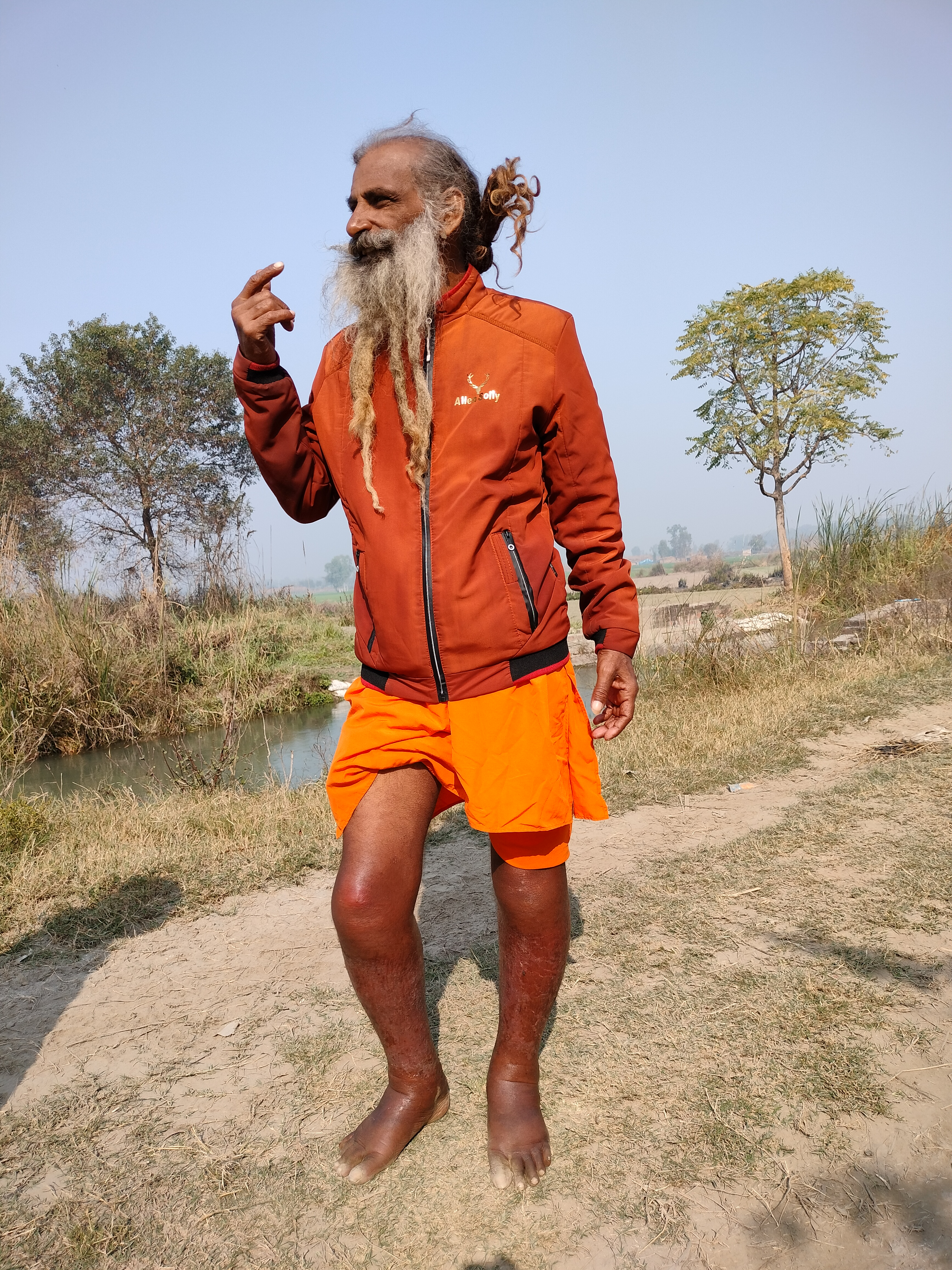
 I call him Kaka Maharaj—Kaka for uncle and Maharaj for his ascetic life. He calls me Tagore because of my bookish ways. He is on the path for the last forty years. Kaka Maharaj stays in his hut by the canal away from the village. I visit him three or four times in a month and there under a mango tree we hold our satsang discussing the matters of bhakti, gyan, liberation, myths and dhyan. He is a reclusive man but allows me to have his company for some time. His eyes have a penetrative shine and depth. I can feel he is a great journeyman on the path of spirituality. He is deeply into bhakti and dhyan. His guru is a local saint who graced the local area more than hundred years back. I have rarely come across such divine love for one’s guru. He is a worshipper of Baba Kude Bhagat. Baba was a realized soul and a social reformer in the area. I’m sure Kaka Maharaj will cross the river of karma, births and deaths with the help of the boat of love and devotion for his guru.

The making of a sadhu

 There was a knock at the gate. A sadhu with kindly eyes stares at us. He had snow-white beard, a typical well-established mendicant’s facial growth. And his hair was also pure snow-white. It was very surprising to find him looking with a certain familiarity. And there was a twinkling mischief in his eyes, a pleasant teasing as if he knew all about me and I hadn’t any clue about him. For sure, he knew me but I had hardly any clue about his identity.

My brother puts up a challenge for me to find out who this great sadhu is. I kept on staring at his face. But I couldn’t tell who he was. And then my brother tells me he’s Rakesh. I nearly jumped out of the ceiling. At the mention of Rakesh the faded signs of a once familiar face began to emerge out of the little space that was not covered by facial hair and his long mendicant hair locks. I could now make out that this was Rakesh indeed. It was a massive surprise, big enough to rattle my nerves. Even the wildest imagination about him as a sadhu was impossible. After all, he used to be a normal boy. He was interested in physical exercises in the village akhara. A not too vocal boy he had a very nice stocky and strong physique. I couldn’t make out how come he has turned out to be an ascetic.

Since I hadn’t met him for the last 15 years or so, it was very difficult for me to find out any logic into his becoming an aesthetic. He looked a perfect elderly sage even though Rakesh is a few years my junior. There was kindness in his eyes and his prematurely snow-white beard and orange robe were enough to make you feel that he belongs to that class of ascetics who are not mere careerists, rather who are genuinely on the path of self-exploration leading to ultimate realization. Just after interacting with him for fifteen or twenty minutes, I could make out that he is a genuine seeker on the spiritual path.

Rakesh used to be an average student, unassuming, without having any urgency to show off his talent or skill of any type. He hadn’t any big visions or dreams. Even the villagers hadn’t too many expectations from him. Just like any other boy, you can say. His interesting story went like this.

He was doing well as a transporter and was earning decent bucks. You can say that he was going smooth and economically well off, so there was hardly any material problem. There wasn’t any family problem either in their small, happy unit. And he was physically very strong as I have already told you.

But then his body revolted against him. There was a serious problem with his back. His spine would get locked up, a kind of dislocation where the facet joint of the lower vertebrae slips over the one above it. His body would get jammed, leaving him immobile and he had to lie on bed for months at end. The doctor told him that even a surgery stood very slim chance of curing him completely. There was a big risk and he might get worse than earlier. So they won’t recommend the surgical procedure. In that way he would be bedridden when his symptoms aggravated. His life now meant precautions, painful injections, no physical work and many more restrictions on the routine freedoms of life. He even got bedsores one time. It was horrible, he told me. He got fed up with life. It was the same body that he felt so proud of, it was the same body that he used to put up into physical exercise routines to hone it, it was the same body that he used to feed so lovingly with all the nutrition and now it was failing him. The medical science was also helpless before this condition.

He went into depression as one can imagine and there were a lot of questions staring in his face in the league of ‘why me?’ It shook the foundations of his faith in life itself. One day he found himself running into the cremation ground at midnight. He was losing the fervor of life. There was a fire still burning on a pyre and he put up the hot ashes on his forehead and yelled to all the evil spirits to come and challenge and fight with him. He knew that he was losing his sanity. His mind had at last given up after facing chronic physical problems. He told me that he was feeling so helpless that he was yelling and crying in the cremation ground at midnight. Then some soft whisper chimed in his suffering soul. It asked him to go to Haridwar and bathe in mother Ganga. His inner voice assured him that it will help him. That night itself he left for Haridwar. He stayed there for a fortnight, bathing in mother Ganga, simply enjoying the positive vibes of the place. The hot lava and inner turmoil and agony cooled off in the holy waters over a fortnight. Now he could think with reason and logic and regained some balance.

Again a soft whisper told him to take sanyas lifelong and become an ascetic full time. A complete U-turn in life for a completely different destination. He took diksha from a guru belonging to Gorakhnath sect. The guru mantra very soon catapulted him into a full-grown sadhu in just a few years. You can imagine the power of guru mantra if somebody is very diligent and honest about it in meditation and tapasya. He was ready, the divine spark of devotion burned the stuck-up karmas and the energy knots inside his body opened up for a free flow within three or four years. He rose quite tremendously on the path of spirituality. I could feel those spiritual vibes, a scent of purity and love emanating from him.

When he came to meet me, he was on the sixty-third day of his fasting. He was just having water, tea and smoking beedies, just these three things; imagine surviving on these three things for sixty-three days and still he was energetic, he was playful, he was joking, in fact I couldn’t see any trace of fatigue or signs of sickness about him. Rakesh joked like a little boy that the doctor had told him not to lift a weight above five kilogram, not to walk more than a kilometer at a stretch and take every damn precaution in order to keep his spine out of danger. Now after meditations on guru mantra and tapasya as per Gorakhnath sect, Rakesh was in a position that just on water, tea and smoking beedies he could walk on a pilgrimage to a distance of 300 km, carrying a bag weighing almost twenty kilogram on his back just in order to challenge the medical diagnostics. As per medical science all this would have left him a crippled man. He had just returned from the pilgrimage, on the sixty-third day of his 101-day fast, and here he was laughing and telling his story with full innocent vigor.

I could see the pride in his eyes and rightly so. He is the chief protagonist of his story, a maker of his own destiny, a keeper of his life in his own hands instead of surrendering it to the doctors. He decided to chart out a separate course for himself instead of getting daunted by the diagnosis where an injection would cost 60,000 rupees and bedsores awaited to define his life in terms of pain and suffering. There was a time when once the situation aggravated he had to take bed rest for two or three months at a stretch and bedsores would eat into his sense of dignity, giving him immense agony, helplessness and pain. Now he was a free man floating around on the fuel of spirituality, fueled by the blessings of his guru, strengthened by the meditating powers that gave him unbelievable amount of energy even though he hadn’t eaten anything solid for more than two months.

So the almost crippled Rakesh was gone and here was a joyful, merrymaking, kindly, pious sadhu rechristened Bhootnath by his guru. When you become a true spiritualist you start grabbing the traces of ultimate truth that are cascading around in each particle of energy swarming around you and for that you need not be a well-educated person, you need not be a well-versed person in scriptures. Life itself is such a big teacher. It makes you a perfect knower of things. I have read thousands of books and Bhootnath has hardly read a few dozen books in his life and that too without much attachment in his heart for the habit of reading. But when we started talking on various topics, of course belonging to the domain of spirituality, I could see that the path of self-seeking gives one so many mysterious avenues of knowing things from very fresh perspectives, almost from hidden sources. He seemed to know all without reading or hearing the kind of stuff the novices like yours truly use on the path of true knowledge.

It was wonderful to talk to him on various topics. He told me about his numerous experiences. He had reached up to a level where he had clearly enjoyed out-of-body experiences wherein his consciousness could see the material body lying on the ground and could recognize and feel that duality.

It’s expected from anybody who is on the path of spirituality to feel very close to nature. Bhootnath feels very close to Mother Nature. He had recently undertaken a plantation drive and was eagerly looking forward to get some help in his mission of making Mother Earth green. He stayed with me for more than two hours and it was a treat to be with him, this entirely reformatted man. If I compare his former self to the present avatar, it is unbelievable to even think of this transformation. Is it the same Rakesh who used to appear so normal in most of the things that the village boys enjoy while they are growing up in the bucolic, free environment? But now it wasn’t Rakesh anymore. He is Bhootnath now, so wise and a very nice ascetic man.

Bhootnath was oozing with a kind of imposing elegance, which anyone on the path of spirituality can feel. It was wonderful to see him having a cup of tea, a glass of water; it was a treat to watch him smoking beedies. It was like a bird has gone out of the cage and was now enjoying free flights in the limitless expanses of the sky. He walks on foot most of the time. He says his stick is his main companion, his sole support apart from his guru’s blessings and his guru mantra. His saffron cloth bag is his entire possession.

I asked him did he miss the village which drove him to pay a visit. He told me the reason for his recent visit was his mother, mai he called her, just like he would address any woman on earth as mai. He somehow came to know about her blood cancer. He said, ‘Even though I’m an ascetic I cannot forget that she is my mai, she’s the one who gave me this body. I’m eternally obliged to her.’ In the hairy spools of detachment, I could feel very feeble, sadly pining notes of affection that would somehow identify a special mai from all the mais around. And what is wrong in that? Love comes in multiple layers. A mother is a mother forever even to an ascetic.

Bhoothnath was planning to take this special mai to Himachal for Ayurvedic treatment. She would be very happy to see all the open nature around her; maybe at least this much I can do for her. He said this in a very loving, soft, gentle tone, as if he was now father and mother both to all the worldly sufferers like us.

As I saw him off at the gate, it was such a soothing sight to see him walking on his path, slowly putting his stick in front with each step and the village dogs barking at the stranger. He moved as if this meeting with me didn’t carry any leftovers with him. As an ascetic you become a stranger in your own village. Most of the people in the village won’t recognize him if they come face-to-face with him because the robes, big beard, long locks of hair have completely redefined Rakesh, sorry Bhootnath.

He is in a different league altogether. He has a genuine smile, a smile of kindness and forgiveness. I sincerely believe and I’m hundred percent sure about it that he will go very far on the path of spirituality. He may even attain ultimate liberation in this lifetime only. I could see it on his forehead. It was wonderful to meet this spiritualist. Nonetheless, it was a big surprise to me. I do hope to meet him sometime because I miss those positive vibes, the fragrance of his spirituality, the scent of selfless seeking. Who won’t like to meet such people?

PS: Bhootnath is doing tapasya now... standing 24 hours for the last six months... sitting not even once...he takes tea, water and smokes beedi only... nothing else...the power of soul as a source of sustaining the body.


A simple man of faith

 There is a simple man in our village. He is in his early fifties and a grihastha. He is a small farmer but his wife is a government teacher. His son and daughter and their spouses are in government services. People say Almighty has been very kind to him in giving him almost everything, without much effort; in fact, most of the things that the other villagers struggle to achieve seem to be given to him on a platter. Whenever I meet this man, I can see a spark of the divine feminine in him.

As we know this universe has a divine polarity comprising divine feminine on the one side and divine masculine on the other side. It is not necessary that a person who has been born as a biological man or woman or any other gender identity will essentially have the corresponding divine male or female aspect or element in him or her. We categorize people either as a born male or a born female or some beautiful combination overlapping genders. But irrespective of their categorization in terms of biological genders, people have a subtler layer of classification: divine female element or divine male element defining their personality. This latter subtler, more nuanced characteristic is not necessarily bound to the biological male, female or any overlapping gender identity. A biological male can have the spark of divine female in him, defining him as a soft, elegant, receptive persona. Similarly, a biological female may possess the divine male spark in her personality, making her aggressive, dominating and loud. The neighborhood peasant women, most of them, fall in this category. A few of them even beat their husbands, sitting on their chest, gnawing their face, shrieking loudly. I call them the clan of warrior women. 

Now this person that I mentioned is biologically a man. But he possesses the divine feminism beautifully personified in his personality. He is very soft with notes and gentle with words, almost whispering apologetically. He is elegance personified the way he moves his body, the way he takes his soft steps, the way he smiles, everything. You can say he is a very nice personification of the divine female element. His emotions are poetry personified. But this spark of the divine feminism in his male body is intriguing for the people around. Things get still tougher in a male-dominated Jat society where being a man is about being loud, aggressive, raw, rough and tough. On account of this visible contrast in the material world, the contrast of a male body having feminine elegance, there are many who would just laugh at him. Many people pass sarcastic remarks. But that is their problem. This man is not bothered about what people talk, think or say about him. He is very busy on his path of bhakti. The people with divine feminine element in them have a great potential for self-realization through bhakti marga involving total surrender to the deity. It stands on the pillars of complete receptivity of faith and unquestioning acceptance of the omnipotent and omniscient deity. How can it be possible without the mellow, fluid strength of the divine feminine?

I have seen and heard about him following various gurus in the region. He would go into the ashrams and do selfless work. He organizes kirtans and sings wonderful bhajans of love for the almighty. In fact, there is a group of women in the village who almost take him as their guru who is there to guide them on the path of bhakti. It’s a wonderful sight to see him and his group of women going for religious congregations, following pious rituals or singing devotional songs. I always had this feeling that this man is on a very solid footing, with his feminine steps, as far as the ultimate realization is concerned.

Sometime back I found him standing in front of our gate, very submissively, even hesitatingly, as if lost in many inhibitions whether he should knock at the gate or go back unannounced. By chance I saw him standing there otherwise I believe he would have even left without calling on me. He greeted me in his gentle, elegant voice and manner and asked if I can give him a bit of time because he needs to talk. As we started talking, there were tears in his eyes, the tears of an unrequited love for the almighty, his divine lover for whom his soul has been doing tapasya; the stream of tears almost a river of sweet suffering to meet his divine lover, the almighty. After decades on the path, despite being a great selfless servant to many holy men, he openly confessed that there is the same restlessness, the very same suffering, the same stress as it was when he started on the path decades ago. He asked me frankly what was the use of selflessly serving all those gurus, what is the need of that selfless work in the ashrams, what is the purpose of holding those kirtans and nightlong singing of songs in the Lord’s praise. A huge why staring at his soul.

‘What was the use of all this if after so much time and service I feel I am where I started from? There is the same restlessness, the same suffering, the same torturing feeling of something missing. Now I wonder has it been worth it,’ he seemed thoroughly shaken.

I felt that he was disgruntled with his gurus, with the manner things are organized in ashrams, the sweet-sour bickering among the devotees, all summing up to give almost a kind of feeling which you have in the society at large, or within your house.

‘Who am I to tell you? A novice while so many babas haven’t been able to guide you?’ I was about to reply. But a split-second reflection stopped me. And I would go on to explain a few things to him as per my level of understanding born of my journey so far. Why I chose to speak to him? It needs a flashback.

There is this girl who is a very distant relative of mine. She is a sweet householder with three beautiful children. From the derivative threads of relatives, I qualify to be her maternal uncle so she calls me mamaji. I had never met or talked to her in my life. She had heard a few summarizing bits about me, just vague biographical phrases. She is a devotee of Mahavatar Babaji. She called me for the first time and introduced herself. As per her belief system, she acts as a medium to convey Babaji’s messages. She goes into a trance, the pen draws of its own will, a psychotic trance, and meaningful messages surface, many of which have resolved problems for those asking divine intervention from their side. ‘Mamaji I hardly know Sanskrit and chaste literary Hindi words but sometime the messages come in such highly refined language that even I’m surprised and they help people,’ she told me. The problem-solving messages by Babaji helped many in her friend circle. She was intrigued and wanted to know more. She pestered Babaji to tell more about it and he would just laugh her away in her dreams or trance. Feeling more intrigued she thought of going to Sadhguru to get a clearer idea about things. But Babaji laughingly teased her that don’t go to him. His mission needs people like you and he will keep you as a spiritual worker among his followers, then who will take care of your children. ‘Then mamaji your name struck me. My inner voice said that this man knows quite a few things intellectually that may explain many things. But experientially he is still a novice, in fact a fool. So mamaji explain things intellectually, your being a fool experientially doesn’t matter,’ she laughed.

So I poured out my entire verbal diarrhea in response to her never-ending queries. ‘Ho mamaji you can set up a nice business in the bazaar of spirituality. Who is bothered about experiential aspect of true knowledge? Nobody. You can start selling yourself. I will help you. There are so many judges and high officials who are lost souls and need words, words and more words on spirituality,’ she teased me and gave a business plan. ‘I will surely fail in any business, be it material business or spiritual one,’ I laughed away the plan. Then after a few more conversations and having been bombarded by more intellectual words, she started wondering about my fate. Now, yours truly has waded pretty testing waters in life. She felt sorry for me, the typical way nieces do for their senior relatives and then when she went into her trance she put up my question to Babaji. ‘Why has it been so tough for mamaji? Why has he such a floundering date with fate?’ she asked. And Babaji assured her, ‘Don’t bother about him. It’s his own choice. This speeding of karma. He wants to take a leap. A leap of five births’ karma in a single lifespan. Now that will raise sparks and raise the temperature for him.’ She told me this sullenly. I said don’t feel sorry beta, it’s our own journey based on our own choices. After that as an intellectually crammed (to the extent of verbal and written diarrhea) and experientially novice, I try my best to explain a few things to those who arrive at my doorstep. Beyond that I’m not interested in anything. So I decide to talk to this wonderful human being who has now come seeking my advice. 

I told him, ‘See you should not expect the people on the path of spirituality, the devotees, the religious institutions and gurus to be the perfect replica of divinity on earth. These are mere indicators; they just systematize a certain set of rules so that the devotees can progress on the path. It’s merely a start, a beginning, to further build upon it. All this systematization of scriptures, rituals, gurus, deities is just a vehicle. The main reason for your pain is that you considered a mere vehicle as the destination. Just like you take a train or a bus or a two-wheeler or an airplane to reach a particular destination, does it mean that particular means of communication is your destination. Don’t we just forget about the vehicle and enjoy the destination once we arrive? The means are never the end. But this is common human folly to start taking the means as an end in themselves. The same is with gurus, with ashrams, with followers, with holy works and pious bhajans. All these are just material or not so material means to an end, the goal of supreme realization. You should not look for perfection in institutions, in gurus, in your fellow devotees. It is never about them. It is always about you. Because wherever you have an institutional build up, there are certain elementary or basic things of life that we need to run a particular institution or ashram. Worldly materiality cannot be avoided. It is always looking over the fence to creep in. So after a time the very same feelings that you feel as a householder also manifest in ashrams and institutions and a devotee feels almost cheated, thinking what is this, I was expecting something totally different but here also things are more or less the same as they were in my house. Please do not fall in this trap of judging the gurus, the fellow devotees, or a particular stream of belief or sect or ashram. Don’t feel victimized or cheated that it was not worth it, that nothing came out of it, that you wasted your life. It has been worth it believe me. It has served its purpose. It was first in the hierarchy that accepted you with its divine grace. You must have been feeling suffocated and restless within your duties as a householder, as a part of society just like any other person around. And that is why you, in accordance with your soul’s eagerness to spread its wings and be a part of something larger that defines you as something above and beyond your identity, came out and met these wonderful people. You were adopted by a sort of larger family where the rules and responsibility that were streamlined as a householder are now modified to give you a feeling of freedom. It’s just an opening, a bit more space. A coming out from a narrow alley to a wider street. There you were the head of the house; here it is the guru who runs the affairs. Instead of the family members, now you have fellow devotees. Instead of the common mechanism of running a house, here it is about running a larger set-up for an institution or an ashram. The fundamentals are the same, just that you become a part of a larger entity, a larger household, a larger community where you feel better and relaxed just for the more open nature of it. It’s a breaking of former confines. It is just like this. Suppose there is someone who is incarcerated in a small cell in a jail. And if that person is brought out and allowed to come into the prison yard, which itself is still a part of the prison, but the moment he comes out of his narrow cell he sucks in the free rays of the sun and he can smell the traces of freedom, he can enjoy life even though he is still in the jail. And if you keep him in that prison yard for a few months, the same feeling of being trapped, being incarcerated, being jailed will come creeping even though now the space is far-far bigger than what it was there in the tiny cell earlier. So similarly earlier you got fed up with the little cell of your household, then you were given a bigger platform as part of ashrams, as part of groups of devotees, as part of devotional music groups and you felt better. Now please don’t think that this stage in your life has not been worth anything. It has served its purpose. Just like the prisoner coming out of his narrow little cell feels better in the prison compound, similarly you were coming out of your house and its troublesome confines and enjoying life as a part of religious communities. It gave you a sense of freedom. But now your soul wants something more, it wants to become a part of a larger entity, a bigger group, a further spread out setup where it can further spread its wings to fly in liberated skies. Now as far as I can feel and understand, you want a dose of further unqualified freedom, unconditioned from disciplehood, serving in ashrams, massaging guru’s legs and the like. I will tell you a few simple techniques which will help you feel liberated from your situations that you feel have confined you in a narrow bracket as of now.’

I pointed to his footwear and said, ‘Why deprive yourself of graceful contact with mother earth? Try to walk as much as possible on naked feet.’ I could feel that he is not in a position to renounce his material world. He is pretty much attached to the beautiful world mainly through his little grandson. Nothing wrong with that. So I suggested him a long pilgrimage of let us say two months to visit Haridwar and Rishikesh. ‘Keep a cloth bag, put your footwear in it, have a bottle of water, have a stick as your guardian, as your companion, keep a yellow ascetic robe in it. If you feel hesitation in wearing the ascetic robe in the village itself, thinking what will people say then you can wear the robe at a distance from the village where nobody recognizes you. Now why am I telling you to wear the ascetic robe even though you are not an ascetic? The reason is that it is a mark and symbol of asceticism and it will save you from many a dark eye on the way. It is not an odd sight in India to find ascetics in their traditional robes moving across isolated places. So many people would just give you respect and they won’t bother you. For example, when the night is falling and you need a place to spend the time and some villager or someone from a little hamlet comes across and sees an ascetic coming, he or she will offer you a place to spend the night and even offer you food. And then you can just stay on mother Ganga’s banks for a couple of months. You used to take bucket bath earlier, now you have to spread your identity to be bathed by the unlimited, blissful waters of mother Ganga that are not bound by any material restrictions or physical limitations. Earlier you used to define the sky above you in the form of a roof on your head but now you will be defining your identity in terms of the infinite vault of the sky above. Anyway it will be as good as the prisoner, who got fed up in the prison compound, now coming out of the prison gate and becoming a part of the open society at large. Similarly from the definition of your identity born of your footwear’s touch on the ground leaving a footprint by your shoes, a mediated reality, a fake ego reality, here now as you walk with naked feet you will be giving the infinite lovable touch to mother earth and get defined in a new manner by the real soles of your feet, not just by any intermediary footwear intervening between you and mother earth. Use your footwear when it becomes too difficult for you to walk on account of rough terrain. Now you would be taking bath in the open rivers and ponds and water bodies instead of just being bathed by the limited waters of your bathroom or your bucket. Stop now getting defined by the roof of your house and its suffocating limitations. Now you’ll be defined by the open skies. It will give you the space that you need. It will provide you an opportunity to spread yourself on a bigger platform. And believe me once you return to your house after two or three months, you will retain those glimpses of freedom and unbound deliberation with you because on the path of spirituality the barometer won’t come down at least in this lifetime. If you have touched, tasted and smelt the divine, you will retain that divine grace with you. You are lucky to be located in a village where there is still open space around, where there are canals with freer waters (relatively speaking), where there are big trees. So I would advise you to spend two-three hours daily walking on naked feet on canal embankments where there is solitude. You can take bath in the canals and imagine you are bathing in Ganga. Everything is emotion, bhaav. With pure emotions this village canal will transform into Ma Ganga. You can just visualize or imagine that these are the waters of divine Ganga. Ma Ganga will be washing you of your pains and suffering right here in this canal. If you’re not satisfied with the company of humans, go and embrace trees, talk to them, sit under them, enjoy their company. And brother this according to me seems to be the appropriate way as per your journey so far. You just need a bigger space to allow your soul to further spread on its path.’

I spoke many other things. I spoke with spiritual excitement to the extent that my mouth went dry. What I have presented here is just from recall, there were many other outpours of verbal diarrhea. But what wrong it does if your intellectual jargon helps someone feel better. He had tears of joy now. I could feel him opening up to the scenarios described by me. ‘I already feel so much better, just by imagining it,’ he said. ‘Any experientially challenged fool—like me—will talk and give the longest sermon on earth but the main thing is following it. It looks simpler than it really is,’ I thought. But I didn’t say anything. I could see the change in him. He arrived with a lot of suffering but left as a happy man, calmed and soothed by the temporary respite. But then all spiritual practices are about temporary respites, a series of little salvations, little-little battles won for peace and ultimately there are few fortunate ones who win the entire war, the ultimate triumph, perfect self-realization, call it nirvana or whatever. 

The history of Dahiya Jats

 Dear readers, presenting here the history of my clan. All histories carry some lessons. I hope it also does the same.

If not for all, here is a brief history at least for my clan brothers, the Dahiyas. It’s better to know one’s roots. Well, the present-time Dahiya is a time-twisted derivative of Dahae. It was a central Asian nomadic tribe. Well, we have grown up listening to our elders telling us that long-long ago our ancestors migrated from central Asian steppes. Later on, academic research proved the substance behind those oral chronicles. The facts that are presented here are taken from many well-researched books and sources presented by many Western and Indian scholars and historians.

The Dahae people, to begin with, lived in the north-eastern part of the Persian Achaemenid Empire. The region covered the arid steppes of the Karakum Desert near Margiana. These pastoral settlements were situated alongside the Saka groups, the Sogdians and Chorasmians. The word Dahae, as present in the Old Persian form Dahā, derives its roots from a word in Saka language meaning ‘man’. This usage is based on the usual custom among various peoples of calling themselves ‘man’ in their own languages. However, one famous Western historian maintained that it meant ‘stranglers’. Well, there is a possibility of it meaning the both because in traditional patriarchy like the one found among Jat clans including Dahaes or Dahiyas, ‘men’ and ‘stranglers’ would come out almost the same.

The Dahae people (the present time Dahiya, a derivative of Dahae or the people of Dahistan) lived in the region to the immediate east of the Caspian Sea around Oxus valley. They spoke an Eastern Iranian language. The area was known as Dihistan and Dahistan during the Sassanid period. There is still a place called Dahistan in western Turkmenistan—the land of Dahaes, almost like Hindustan is derived from a literary expression meaning roughly ‘the land of the followers of Hinduism’. Then there is Dahestan in northern Iran also. It was the area of a branch of Dahae people who moved into northern Iran.

There is an ambiguity whether we were almost religionless nomads or the followers of a cult that allied with Zoroastrianism. Settled on the north-eastern border of the Persian Achaemenid Empire, the Dahae people spoke a dialect originating from an eastern Iranian language. According to the Babylonian historian Berossus, the founder of the Persian Achaemenid Empire, Cyrus, died fighting against the Dahae. But when it came to fighting someone who was considered a foreigner by all the feuding tribes in the area, that’s Alexander the Great, the Dahāe people fought within the left wing of the Achaemenid army along with the Bactrians and the Saka at Gaugamela in 331 BCE.  

Saka coins from the Seleucid era are sometimes specifically attributed to the Dahae tribe. They are the Dahae, who along with the Kangs and other Jat clans, fought Alexander the Great on the north of Oxus river under their leader, Spitama. An entire division of Greek army was decimated at Samarkand in the valley of Zerof Shan. When Alexander reached the spot of defeat to take revenge for the ‘first Macedonian disaster’, he was faced with the humiliating task of burying his slain soldiers. He had to retreat and set up his military camp at Zariaspa. However, the brave Jats under Spitama launched an attack at his main camp also. Alexander failed to defeat them, so this mighty conqueror started torturing the women, children and other non-combatant population. Meantime, the Achaemenid Empire fell at the hands of Alexander. Now he could focus on torturing the civilian population of the Dahae settlements.

Jat mathematics of ‘16 multiplied by 2 is equal to 8’ is still popular. You can imagine its crude version almost 2,350 years back. They had a very easy solution. Alexander was torturing women, children and the old but the Dahae leader Spitama won’t accept submission even after the strong Achaemenid Empire had fallen to the great conqueror. Those simple Jats had a far simpler solution. The Dahaes themselves beheaded their unbuckling leader Spitama, and produced his head before Alexander. Only then he stopped the brutal oppression of the common population. Many of them then joined Alexander in his quest to conquer India as mercenary soldiers. In this way a large number of Dahae Jats joined the Greek army. When his Macedonian troops refused to fight in Punjab, Alexander threatened that he would move ahead with his Jat soldiers only. He was sure that these people would not abandon his fighting plans because they were brave enough not to be daunted by the dangers lying ahead. According to Greek writers, the Dahae under Alexander were the first to attack the army of Porus in 326 BCE. Ironically, it wasn’t the first or the last occasion when the Jats shed their blood from both sides.

Jats are known to break each other’s head for the real illogical fun of it. They are highly prone to fight among themselves. I can still see this propensity opening out in street fights at a regular basis in Jat villages. So there were Dahae Jat soldiers in Alexander’s army now. But they had their own clan brothers who dreamed of breaking their heads. These fellas aligned with Porus. In this manner, following their querulous ways, the Jat clans, looking for better land and pastures, started migrating to present time India.

I can still see the bloodthirsty craze for owning more land in my clan. Every Jat settlement has had many bloody feuds for land that resulted in killings and lynching. But we are changing. Agriculture has been our only type of culture but now with education we see more cultural colors beyond the farming fields. As of now, there is a tight clump of fifty odd adjoining villages of erstwhile Dahae, the dwellers of steppe plains and Oxus valley, who still hold their distinct identity in Sonipat district of Haryana. The Sultanate came, the Mughals came, the Britishers came but we kept sticking to the lands we had occupied before them. So near to the center of power in Delhi! That shows our propensity to stick to our lands. The Delhi rulers also realized that these fellows will bite back if disturbed. So the ruling seat in Delhi kept changing but our clan kept sticking to its chunk of land at all costs. They killed, got killed in return, kept on killing each other as well, but stayed there.

That’s how nationalities form: the bloody fluidity of changing border lines and the people moving this way and that way. The Britishers were the wisest of the lot who occupied Delhi. They knew the art of human resource utilization. They were aware that these people are very quick with arms and very slow with minds, as Rudyard Kipling famously said about Jats. So to pamper the vanity of our ego they declared us a martial community and put batons, swords and rifles in our hands.

Even within my memory, I have seen and heard about many family feuds for lands where people have been killed. There have been honor killings, far more than you would believe as per the official data. The women and female children have faced a lot of discrimination. But now Jats are cultivating their mind like they did in the fields. We have hundreds of officers in prestigious all India services. There have been scores of commendable fighters for the army. There have been Olympic medal winners and scientists. But still a lot has to change I can feel.  

That’s how histories are made, willingly unwillingly. We assume, we accept, we ignore, we selectively choose, we deliberately overlook. Just to justify our present or our goals that we hold sacrosanct and higher than others. The tribes from the steppes whose soldiers were recruited by Alexander the great now form prestigious fighting units in the Indian military. Times change. The rulers change. Nationalities get redefined. Boundaries change. Names change. People change. Languages change. But what doesn’t change is the same age old virus of hate, fear and greed. It keeps alive in one form or the other. What drove people thousands of years ago to beat their basic fears still drives the civilization in a technology-sharpened manner.

The kite caught in a dead tree

In a world of so many sorrows and so few pleasantries, flying kites is great fun to kids. The kites swipe, loop, hoop, droop, dive and rise, refreshingly riding the crests and troughs of their papery existence. It’s zoom, boom, doom altogether, in fine fettle, in timeless simultaneousness. And when the kites get entangled in the trees, wires, balcony railings and terrace cloth-lines, a fun game of higher degree starts. It’s the game of retrieving the kite and salvaging as much of string as possible. An entangled kite is not the beginning of suffering. Egged on by their carping spirits of innocent adventurism, the kids take it as another game. The same is with life. The entanglements in one phase are just the start of another phase; just a shift. So keep playing your game. Like the kids doing the same with their itsy-bitsy amusements.

The neem tree in front of the house is probably dead. Well, I fondly remember its full green branches swaying to the shravan winds and it opens nostalgic floodgates. Most probably the termites have chucked out the roots. The tree being young, it gives a sad look. Its wood scruffily silhouetted against the background of still alive trees. An old dead tree still gives a dignified look but a young dead tree is a melancholic sight. Its bone-dry, dead branches now ricketily shake to the winds. The trees that are alive sway to the winds. They have juice of life, they have playful suppleness. The dead tree but is a skeleton. It may not be giving oxygen now but there is still a purpose for its existence. Let’s not commit the mistake of considering it an unproductive deadwood altogether. A leafless dry dead tree serves as a nice perch point for lonely birds calling out to get a partner. They can look in all directions. A nice place for love calls. With a willy-nilly quiescence to the instinctive tug of love and desire, they send out their love songs to attract some lonely partner somewhere. Further, its rickety joints are into mischief as well. Its crooked wood seems to plunge and clutch at the tails of the kites flying overhead. The majority of falling and diving kites get caught in it. Then it proudly flutters its takeaway as a triumphant token of life that may still be lying buried in its dry bulk waiting to sprout forth and thus give a surprise to all. I think it has become a master kite-snatcher. Still holding the strings of unrelenting enthusiasm, the children gather under it and play their game of retrieving the snared kite. It gives an impression as if they have gathered under it to collect fruits. A salvaged kite, even torn, is nothing short of a fruit to the little ones. 

Tuesday, November 14, 2023

Skirmish with a centipede

 There must be cockroaches in the house otherwise why would a big rascally centipede enter the house. Well, rural houses usually have many claimants including snakes, rats, lizards, frogs, spiders and many more. Maybe the centipede got angry for not finding a cockroach. An angry x, y, z is almost suicidal, be it humans, reptiles or animals. And if there is an angry creature nearby, you feel the pinch. I felt it. A sharp pain in the left big toe. I'm watching news, sitting on a chair, right leg crossed over the left, leaving the left toe open for attack by the angry centipede. The body seems to be its own master. We overestimate our conscious, voluntarily done efforts to save and preserve it. It knows far more than we think. My conscious part is absorbed in the political slugfest going on the television. But my toe has independent authority to save itself from a big, bullish centipede. I find myself jumping in air. The toe knows how to save itself from a centipede that has decided to bite the hell out of it. The automatic vigorous shake by the toe and its ally foot and their bigger sister leg is enough to undo the centipede's brazen attempt to taste my blood. There is a needle-sharp pain. Thankfully it couldn't pierce the skin.

The calculating and planning human has taken a backseat. It's only the life force in the body responding to the emergency. The left foot is angry as can be understood. O God, the way it counterattacks! It swings into action. And the slippered foot is pounding on the enemy, knowing exactly how rapidly to strike with full force. It's done so swiftly. The centipede is a juicy mass in an instant. It happened so quickly. I'm staring at it as if someone else has done it. Where was I while all this happened? It wasn't me who did it. The body did it of its own volition! Imagine the instinct of self-preservation ingrained in each cell of the body. And still we overthink and burden the mind about  preserving it. The way it strikes at a centipede in retaliation over a bite at its toe proves that it's always on guard against predators both visible and invisible. I think we can allow it more freedom in its functions and not burden its natural operations with our unnecessary worries. 

I'm not sure how a saint would have behaved if attacked by a centipede. I hadn't even stepped over it. It just attacked. Some karmic balance I suppose. Of course the saint's body would have jumped in air at the bite. But I'm not sure about his foot going into retaliation of its own in an instant.

 I don’t think I could have caught it alive because it would have crawled under the hideouts available in plenty. As a normal person staying in society, you have to put a boundary beyond which the parameters of sin cease to operate. You have to take measures to maintain the safety of your place. Maybe that dharma is bigger than killing of poisonous reptiles that sneak into your place. 

Little Maira, my two-year-old niece, is enthused at watching her Tau's body jumping like a monkey. She laughs. Thank God centipedes don't have blood. It's a watery juice of life oozing from the carcass. And a child would always take you out from the complex world of thoughts about sin, nobility, kindness, etc, etc. As I'm staring at the consequences of my foot's retaliatory strike, I hear Maira mumbling,  'Tau isne sussu kar diya.' Means 'uncle it's peed'. And that lightened the moment instantly. Holding my leg, she is staring at the dead insect mired in the watery discharge of its life force. We both laugh then. God would always pardon if you are sharing a laughter with a little kid, even if you are laughing at a dead centipede.

Flood and storms in a little yard

 What do you need when there is fire? Water of course. There was a sandstorm and thundershowers. There is most urgent need for water at this part of the year. But water was furiously splashed by the storm. The trees were shaken, seriously ruffled, jolted painfully in fact. Such storms further elaborate the rustic revelations of the countryside. Many trees fell, branches broke and countless leaves blown away. But they have to bear with it. And they do it with astounding, rosy equity of being, following their tree dharma, always keeping up the intrinsic spirit of resilience. The same storm that breaks their branches, takes away their seeds to far off places for the survival of their species. I have groomed a few marigolds in the shade. Their growth is mediocre considering the time of the season. But their mere survival in this heat makes them special. However faded and small the smile is, it still is a subtle allegory to beauty and truth. When the honeybees buzz over them it seems to put melodic reverberations on the songless lips of the summer. The flowers have been roughly shaken, badly manhandled in fact. However, I’m happy with what remains. I help them in getting to their feet again and smile once more to serve as the symbolic sovereignty of beauty over the beast.

The busy ant-hole in the bricks in the yard comes straight in the line of the flood when it rains. But they don’t complain. Actually the defender groups clump together and plug the opening, saving the cavity from getting flooded. They choke the rushing waters to a trickle, then even that trickle must be gone. I think the little baby ants deep in the cavity won’t even come to know about the storms and floods outside. In the face of a crisis they just do the needful instead of holding dismissing discussions. Many of the frontline workers die in the bargain. But they survive as a colony, not individually. All of them are just ants, not ant x, ant y or ant z. Their little world carries a pleasant innocence about it.

Once the flood is over, it’s the same busy world the next sunny morning. They are calmly consistent in their schedule, storms or no storms. There are crumbs around the gate. The tireless laborers have been carrying their cargo for their warehouse.

The temperature drops sharply on account of the drizzles over the last two days. It’s cool. You feel slightly cold under a simple ceiling fan. Isn’t mother nature amazing? She can help us cope with the most of our modern-day problems, provided we give her some respite from our rampant onslaught. 

Lethal beauty

 Bhupinder loved his taxi pick-ups of senior corporate guys in Gurugram. Less work, refined gentry at the back seat and nice pay. Then Corona struck. The offices closed. The corporate guys and gals worked from home. Even after the removal of the lockdown most of the offices remained closed as people adjusted to a new work culture. So he started ferrying tourists to the scenic Himalayas. It elicited a sense of grand imagination. The edges of his aesthetic sense had been severally whetted by the sparkling vivacity of the mountains. He fell in love with the hills, their wild beauty, their untamed resplendent charm. Vow, sheer Himalayan opulence sprinkled around. With tantalizing butterflies in his stomach, his social media posts were full of lovely hilly delights and sunlit sentiments. Then the posts stopped. I missed those beautiful snapshots and reels of mountains, snows, rivers and forests. I asked him about it. ‘Beauty is dangerous. Attraction is lethal. Gurugram is far better!’ he said philosophically.

It happened this way in Kashmir. A paradise it seemed to him and the Maharastrian family that had hired his car. A happy bunch comprising an old retired patriarch, his son, daughter-in-law and two grandchildren. They had enough education to express the beauty of the paradise in words. Then the snow-covered road tried to remind that it isn’t all bliss in the paradise as they imagined. There are risks and challenges. The seemingly paradisiacal plot is punctuated with hair-raising hurdles. The vehicle wriggled like an injured snake on the slippery ice. A deep gorge just a few feet away on the side. A paranormal proximity to death. The slightest movement of the tyres looked straight bound for the deep ravine. The soft majestic upholstery of nature turned to spiked coffin where even the corpse would feel the stingy pains of the nails.

‘My lungs dried up with fear!’ I can see plain fear surfacing in his eyes as he tells me now. The family had to get down to push and prod the vehicle through the snow. ‘That hundred meters of drive is far weightier than lakhs of kilometers I have driven in my life!’ he summarizes. The recalling of that short hazardous drive seems a long continuance of sufferings even now. Once out of danger the old man had a heartfelt pan-shot of the paradise and declared to his son, ‘Look at this beauty around. But always remember that beauty is very dangerous, usually lethal, and sometimes even fatal. It will seduce you, entice you, and before you realize you are in the pits.’ Then the old man laid to tatters the foolish blueprint of his son’s beauty-seeking scheme. The old man nailed it with luxurious precision. To all this Bhupinder agrees completely. Even with pollution, silent spring, noisy traffic, smoky bouquets, smoggy brickbats, topsy-turvy sobs and smiles, and wilting and blooming dreams, Gurugram is charming and safe. He is happy to be back in the familiar territory.

The savior of a rocking boat

 It’s a very unhappy family; its reputation gone, the land sold and the grandfather and the father rank one and rank two as liquor-lovers in the locality. It means the four young daughters, their grandmother, their mother and the youngest boy, the only lamp among many females, somehow wade through the waters. The last piece of land has been sold recently. They are now remaking the crumbling house. The family patriarchs’ role—both of them anciently addicted to booze—in the project is to get sloshed early in the morning and then leave a trail of drunken mischief that sometimes takes even the laborers and bricklayers in its wake. Sometimes the work gets stopped as the entire construction staff is seen rolling in the sand after availing the kind patron’s offer.

Getting boozed up is their sole profession and they have a thoroughly academic approach in the field. The house is now nearly complete. The young daughters, their mother, the son and a very contended looking young man are surveying the proceedings from the terrace. It looks a happy family with a caring and helping young man around. He is a chap from the neighborhood only. He usually fills up most of the blank spots of duties and responsibilities left vacant by the all-time drunk patriarchs. He is all help personified, twenty-four by seven kind of schedule. The rumormongers allege that he makes love to one, most probably two, three or all four girls. He is passionately relevant to their struggle of life. His lovemaking, caring, eager, innovative blends mean that the rickety cart of the unfortunate family somehow moves on. The lover and the ladies stand together and somehow try to outwit the ill-fate’s constantly conjuring brain to put one more hurdle in their path. And the adherents of prudishly structured morals make faces, put up taunts, take jibes. But does that help the family in any way. The people would rarely help as a society. They would just spread endlessly beguiling toxicity. The poisoned fingers would meander to scrape the little healing crust forming over their wounds to keep the scars alive. The ostentatiously shallow ethical code, programming a censored and controlled social fabric, looks with hate at these little holes. But seeing them altogether, surveying the fruit of their labor sends positive vibes; a kind of musical metaphor among the sermonizing cacophony and hypocritical jabber around them. He is definitely moonlighting as a savior of the rocking boat.