About Me

My photo
Hi, this is somebody who has taken the quieter by-lane to be happy. The hustle and bustle of the big, booming main street was too intimidating. Passing through the quieter by-lane I intend to reach a solitary path, laid out just for me, to reach my destiny, to be happy primarily, and enjoy the fruits of being happy. (www.sandeepdahiya.com)

Saturday, May 31, 2025

Purchase Books


 Poetry

 The Oasis Hunter


In an enthusiastically absurd world, why not be a peace laureate, a poet? Walking on a solitary trail, away from propagandist overtones, luminously imaginative, enjoying the regaling vocal varieties of bird songs, hewing his own convictions, reverentially visionary about the religion of love, flowing with the meticulous splurge of emotions.

A poet is a poorly clad rich man laden with inner wealth. A golden lamp in a thatched hut.

There was a time when even the brightest flicker of optimism inside him ruled out the possibility of redemption. The waves of fate spared no pains to land him at a lonely, wretched shore. It’d take loads of pain to arrive at the littlest gain. It felt like he’d just followed a futile circle—returned to his idiotic basics. A nihilistic romanticism. A shipwrecked piece at the freewill of chance, tossed by salaciously flowing freeways of stormy waves.

The storms churning in his soul make him a poet. Mystically enriched. Richly resonant with the hymns of love and peace. In tune with regaling restfulness. From his basket of agonies now he draws out ecstasies. Crossing the desert he now arrives at his oasis. He has taken long-long routes to sandy failure. Success and failure lose their meaning. The golden sands—that’s his oasis. It’s pure karma. He gets in splendid unison with the constructive spirit.


The Shape of My Love


The Shape of My Love invites readers on an introspective journey through the myriad emotions that define the human experience. Spanning themes of love, loss, and the eternal rhythms of nature, these verses by Sandeep Dahiya (Sufi) resonate with profound depth and lyrical grace.

From the tender exploration of love's many facets to the poignant reflections on heartache and resilience, each poem in this collection offers a glimpse into the complexities of human relationships. Nature serves as both backdrop and metaphor, from the solitude and pain of ‘Lonely Trees’ to the majestic presence of ‘Mountain Eagle,’ mirroring the joys and sorrows inherent in life's journey.

Through verses that contemplate existence itself—its fleeting moments and enduring truths—the poet captures the essence of being human. Themes such as renewal in ‘Spring’ and the melancholy beauty of ‘Dying Leaf’ evoke universal emotions that resonate deeply with readers.

The book is a testament to the power of poetry to illuminate the soul, offering solace, insight, and a profound connection to the shared experiences that bind us all. With exquisite imagery and emotional resonance, Sandeep Dahiya (Sufi) crafts a collection that speaks directly to the heart, inviting readers to pause, reflect, and find beauty in life's most profound moments.


The Lust of Life


Plato: “Every heart sings a song, incomplete, until another heart whispers back. Those who wish to sing always find a song. At the touch of a lover, everyone becomes a poet.” And as love caresses you, you are supposed to turn a poet. And your life a poem. A life lived poetically nourishes your soul. The prose approach to life is simply to earn the conveniences to support you materially. The brushstrokes of poetry softly touch the soul without disrupting its restful muse and bring out the nuggets of love, compassion, harmony and peace. If you are poetic in nature, you have the potential to be anything because all these elaborate extensions of your life, your dreams, your professional and personal goals, your milestones, the world around you, all these and more are nothing but a reflection of that poetic pure seed.


The Kashmiri Girl 


Most of these poems were written during the turbulent twenties of my life. In the early twenties, one is pursued by the glorious uncertainties of life. It’s a slippery, exciting and critically opinionated path. Don’t worry, it’s just a surge of extra energy, nothing else. The stage is shaky and realities are yet to get a foothold. You trample a lot of turf like a young colt spraying legs in all directions and galloping just for the sheer causeless fun of it. Of course, there are consequences but they hold their miserable importance in the eyes of the elders only. To the youngsters they are just irritable speed-breakers on the thrilling path. One’s hormonally buzzing self floats in a hazy mist of unripe, raw, juicy, sweet-sour tart of dreams and imaginations striking the moron mass of established norms. The hormonal-storms-fuelled beliefs, views, opinions and dreams create sparks and sometimes thunderstorms. Nothing wrong with that! That’s all part of our making. It’s a pretty noisy and shaky groundwork born of your ‘making’ that provides a bit of stability later in life. Ask anyone, most of us are very lenient and forgiving towards our youthful gallops even if these have given us many bruises after the hard falls. We wear them with pride like the symbols of our reaching the peak of the mountain.


Chimp, Champ and Chops


Holy Harlots


Holy Harlots is a rippling bouquet of emotions and heart-felt songs which have been the poet's companions during the toughest phase in his life. Most of these have been written in the charming countryside of the poet's native place at a small village in northern India. The poems try to capture the softest nuances of perceptible and imperceptible naturalities against the background of human trials and tribulations. The verses chime with an enamouring softness of the heart which sound Godsent against the present times viciously self-obsessed noise. The poems are exceptionally laced with silent spiritual reflections over the comforting quietude and teasing tranquility of the countryside. These simple swathes of aesthetics take the reader to a slow-paced world...far, far away from the 'maddening crowd'!


Lovebites


Without the seed of poetry there won't be any prose. Just like without the tiny seed there won’t be a tree. The canopy, the full foliage of the tree, is just an extension of the dream lying with its realistic potential inside the small seed. The elaborate network of trunks, branches, twigs, flowers, fruits and leaves is nothing but a commentary on the small poetic seed. So all ye wannabe writers of a good life story, nurture the poet in you, who understands the value of pause in life, who moves slowly to watch everything, sight and smell everything. Whose senses are open to the inclusive interplay of wonderful harmonies of the supreme song, the universe, the one song.


Fiction

Mists on the Moon


Charles Dickens says the trifles make the sum of life. So don't be too serious about anything in life. These are little tales of humour and humanity. Elegant, tender and meandering through common occurrences in the life of ordinary people, these tales convey the timeless principles of humanity. The stories carry delicately poignant messages. The characters possess winning humour and show the colours of friendship, love, affection and care. There are lessons on practical philosophy also. All in all, the work is meant to give the readers a pleasant escape from the harder side of life.


Beyond and Beneath


Beyond and Beneath is a long story, slowly moving like a broad river in its journey through the plains. It is just an effort to highlight some sober facts like the true meaning of nationalism, religion, politics and humanism. The work has very sharp political connotations. But I would like to clarify that while espousing the cause of clean politics, I have taken very dagger-sharp cuts at certain political forces whose brand of politics results in reversing the basic meanings of religion and nationalism. Also, it is for sure that all such literary efforts from my side are just a battle cry against bad politics, rather than going against any particular political stream. By having creative cuts at the razor-sharp edges of most of the political blocks in India, I have tried to carve out a straight-faced deity whom people have in mind when they envision their interests in the safe hands of the state.

One of the characters is a beautiful girl named Phulva, the girl. Through the trials and tribulations of her beautiful path through the society of the settlers, I have tried to depict how these almost stateless, religionless people come into friction with the sedentary society to create sometimes ecstatic and oftentimes tragic episodes. She smiles like a lotus in the perilous waters of a muddy pond. Also accompanied is the pleasantly sweet-sour path of the now-vanishing nomadic culture that once caressed the settled society with the suddenness of a fresh and fragrant gust of wind. When the pitch up their campsite on the fringe of settled—and the so-called civilized society—always there are showers and sparkles as the merging fronts of two different entities rub past each other.

The main protagonist is a lame Hindu religioner. Well so much for his Villainy! But there are reasons for badness. After detailing the circumstantial forces, which put him on the path of selfishness—and ultimately his brand of utilitarian Hinduism—I have tried to depict him under the light of multifaceted sun of faith. Through the testing admixture of religion, spirituality, blind faith and superstition, I have tried to churn out substantive meanings, which have eluded the mankind puzzled by conflicting dilemmas of faith, superstition, ritualism, or the religiondom overall. At the other end is his guru, the man with the real, selfless, utility-less mission of spiritual awakening. Through this contrasting set of religious personalities, I have made a humble effort to point out a little arc along the infinitely drawn out compassionate folds and contours of Hinduism.

Heartily mixed up in the silent pace of the tale is the old Muslim fisherman. The silently brooding—and expertly following the principals of humanism—frail man plays a far-far weightier role in the tale with his effortless maneuvers instigated by a heart lit by the unsung lore of true humanity. The man from Bengal, a direct victim of the partition-time butcheries, carries along the seemingly insignificant path with firm, humanistic strides.

Then there are smaller players: the disciples, good and bad dogs, stoically suffering animals like donkeys in the caravans, and plainly villainous bunch of thugs who can always put their foul smell in any fragrant orchard—all jutted against the exciting admixture of fate and human deeds.

It is a highly literary work. The target audience is all those who love real humanism devoid of all misinterpretations and miscalculations.


Faceless Gods (Volume 1, Second Edition)


Faceless Gods (Vol. 2, Second Edition)


Faceless Gods is a long story, slowly moving like a broad river in its journey through the plains. One may feel that the work has very sharp political connotations. But I would like to clarify that while espousing the cause of clean politics—which is almost a utopian dream—I have taken, without harboring any ill-will against any specific political ideology, very dagger-sharp cuts at certain political forces whose brand of politicking results in reversing the basic meaning and essence of religion. One of the characters is a beautiful girl named Chakori, a banjara girl. Through the trials and tribulations of her beautiful path through the society of the settlers, I have tried to depict how these almost stateless, religionless people come into friction with the sedentary society to create sometimes ecstatic and oftentimes tragic episodes. She smiles like a lotus in the perilous waters of a muddy pond. The chief protagonist is a lame Hindu priest. The villainy of a character is no slave to anyone’s religion and belief system. We have our own inherent system that moulds us in a particular cast. But we have to accept that there are reasons for one’s gray character shades. Heartily mixed up in the silent pace of the tale is an old Muslim fisherman. The silently brooding—and expertly following the principles of humanism—frail man plays a far weightier role in the tale with his effortless maneuvers inspired by a heart lit by the unsung lore of true humanity.


Faceless Gods (First Edition)


Ice Cubes on Desert Sands


There is no separate story. Stories weave into each other like a well-spun fabric. Stories are like rivers, ever flowing, existing yet not existing, shifting still static, different and similar at the same time.

The pieces. The patchwork. Stories within The Story. Yours and mine.

Be the princess of your story. The seed in you carries the potential to be the tallest, luxuriant-most tree. The powerful force of creation propels the potential for maximization. Nature doesn’t want it to be a world of half-smiles, half-growths, half-blossoms and half-potential. There is a tendency for fullness. It pulls the process of evolution for the maximum, for completion, for what we call greatness.

O my mind, my seat of potentiality, take my journey further,

Be the seat of my strength, not weakness,

Be the seat of kindness, not cruelty,

Be the source of light, not darkness.

You, me and all of us are born for the stories of greatness. Let’s share our stories to see through the journey. Please give me company while I tell a few stories!


All That Woman Is


A man might take rounds of earth to seek his destiny; a woman realizes hers just by being there with her love and care. Bhamti becomes the soul of Vachaspati’s efforts to write the biggest commentary on Vedas. He has gone into a trance. Bhamti stays around like a pair of protective hands around a tiny flicker of lamp to save it from the storms. Her love shines brighter than the masterwork of theology.


Dreams of a Common Man


Dreams of a Common Man is a pickled, various flavoured, cross-genre pill of immediate taste. There are unforgivingly apolitical outpours of the helpless common man; there are magical realist traces of a pseudo-reality trying to portray a better, more convenient world; there are poetic outpours in prose through heart-touching little anecdotes; there are off-beat, unconventional attempts to lay bare a-bit-possible aspect of history; there are abstract thoughts that may capture any context as per the reader’s suitability; there are not-so-fictitious versions of the happenings that matter to the common man; there is flailing, browbeating tug of war among the religion, faith, belief and non-belief; there are large cynical pools, ordinary collectives of the common man’s helpless grudges against the larger forces...It is like T20 cricket, fast paced, expected, unexpected, unorthodox literary hits to the fence. It basks in convenient improvisations of style and substance. The creativity set free of the conventional genres and bound ideas. It captures the realities lying in dust at the mundane level, polishes the titbits of socio-historical facts with the crude, judgmental brush of a common man who is not bothered about the burden of his own name and identity.


The Shadows of Love


...and finally the sun has to smile to drive away the particles of darkness clinging to the twilight mist, for life, for love, for happiness... These are the stories of hope, resilience, courage and conviction. (Sufi) Sandeep Dahiya is the author of about a dozen books. His works carry murmurs of gentility and tender aroma of small things in life. He is charming, poetic and generous in his views about life and living. Sandeep elegantly portrays little things that have a big role in making our lives joyful. His writings are an eclectic blend of witty charm, experienced softness and scented receptivity. Not to forget that he writes with intelligence and insight. His characters are wry, insightful, whimsical, lively as well as funny.


The Bread of Stones 


The Bread of Stones tries to convey the message that ordinary beings possess extraordinary potential to win against odds, to jump over hurdles, to smile over tears, and, most importantly, to be happy when there aren’t enough reasons to be. They are the faceless constituents of a massive commonality. They are surrounded by a swiping generality. They are coloured in the monochromes of mundane reality. Still they are special. We have to acknowledge and celebrate the extraordinary in the ordinary people. I see heroes and heroines in my simple characters. They fight, and oftentimes fail, but write a little passage in the infinite book of life: an ordinary life that was lived substantially. On the small stage of life, they live very intensely. Somehow, the world would not be the world that is still beautiful without their contribution. They heave humanity onwards in its march to some better destination.


Runaway Husbands


It’s a beautiful world. If you are happy and joyful, this entire existence feels the same through you. If you exist on a plane of harmony and peace, you invite the entire cosmos to the same plane. When you smile, everything around you does the same. So be a joy-maker and see the beauty underlying everyone and everything around you.

Look out for beautiful souls around you. They are great in their simple ways. They are exceptional and unique even while they are part of the rutted routine. But they run this world and touch our lives in constructive ways that we hardly realise. As Charles Dickens says, ‘It's not possible to know how far the influence of an amiable honest-hearted duty-going man flies out into the world; but it’s very possible to know how it has touched one’s self in going by...’

Through my stories, I try to positively touch the lives of my dear readers. These stories deal with common people who try to stand proud in front of their own conscience. The rest of the life’s tale naturally follows from this point. As Thoreau sums it up so beautifully: ‘Public opinion is a weak tyrant compared with our own private opinion. What a man thinks of himself, that it is which determines, or rather indicates, his fate.’


A Half House


A Half House is a pickled, various flavoured, cross-genre pill of immediate taste. There are unforgivingly apolitical outpours of the helpless common man; there are magical realist traces of a pseudo-reality trying to portray a better, more convenient world; there are poetic outpours in prose through heart-touching little anecdotes; there are off-beat, unconventional attempts to lay bare a-bit-possible aspect of history; there are abstract thoughts that may capture any context as per the reader’s suitability; there are not-so-fictitious versions of the happenings that matter to the common man; there is flailing, browbeating tug of war among the religion, faith, belief and non-belief; there are large cynical pools, ordinary collectives of the common man’s helpless grudges against the larger forces...It is like T20 cricket, fast paced, expected, unexpected, unorthodox literary hits to the fence. It basks in convenient improvisations of style and substance. The creativity set free of the conventional genres and bound ideas. It captures the realities lying in dust at the mundane level, polishes the titbits of socio-historical facts with the crude, judgmental brush of a common man who is not bothered about the burden of his own name and identity.


Lost in Red Mist


A courtesan fighting for respectable identity among wars and intrigues. A raped foreign tourist picking up the fragments of her violated self to redeem her pride. A helpless pawn in sex trade regaining herself back to begin a new life. The red mist of Kashmir eating away the little worlds of common hopes, dreams, and aspirations. A huge man lifting unthinkable weights for a living, only to be crushed finally. Someone gathering the nameless pieces of his scattered life on a platform. An Australian anthropologist in Andaman and the sole surviving Shompen tribal. A boy taking the onerous task of looking after his still smaller sister. His dreams which grow in disproportion to his circumstances are as good as nightmares. An old man, staying alone with a cat, patching up the holes in his present through tales. A Western tourist at Rishikesh opening her spirits while a whole world drags around her feet.


Self Help 

The Spiked Coffin 


Millennium after millennium we have fought against real animals in the forests and later against our imagined enemies larger than any animal on earth to make bigger and bigger weapons, wasting our precious resources in its wake. The chink in the armor is glaring now: Our unpreparedness to fight against the ‘small’. Corona teaches us a bitter lesson. Is there any solution? Of course there is: Instead of pushing the stage of creation into a corner, from where it decides to launch a fusillade through nano-arrows, learn to balance things in all walks of life. Don’t push nature too far into a corner. It always has the option to hit back. It may not be able to hit tangibly in the form of a dinosaur, it can but surely do the same through invisible Corona and many more. There is a reason why we have pushed mother earth too far into the corner. It’s our intra-Homo sapiens rivalry. Earlier we fought as the weak Homo sapiens who had to band together against physically far superior species. Now those threats are gone. So drop your weapons my dear ever-scared jungle man. We are almost biologically molded to keep fighting now after millions of years of fear and insecurity. Saving other remaining species from extinction is important, but far more important is to stop the virtual fear driven animosity among nations build upon false assumptions of ideologies, faiths and beliefs.

Love


Love defines the countless pathways to the cause of creation as Lord Byron points out with poetic precision: that love will find a way through paths where wolves fear to prey. Do you think fear, anger, hate, envy, jealousy, ego, lust and greed have their own standing? No. Just like darkness is simply an absence of light, all these tortuous tools that lynch our self are nothing but phantoms doing painful rounds in the absence of love. Like a tiny lamp puts out darkness simply by casting light, without fighting the dark, a simple ray of love, a symbol of our true self, chucks out the flimsy appendages of the unreal self. There is definitely limit to everything in cosmos. But there is one exception: Love, prem as we say it in Hindi. One need not fight fear, fury, hatred, jealousy, distrust, ego, lust and greed at various fronts to defeat them. They have a common root: burial of your loving self, your essential nature, under the peripheral dust of illusions and ignorance, making you identify with what is essentially not your real self. Remove the grime, allow the light of love to emanate from your soul, enter your behavioral self, and all around you see peace, harmony and balance.


The Slow Lane and its Everyday Wonders 


In a world driven by speed, ambition and distraction, The Slow Lane and its Everyday Wonders unveils a silent symphony inviting you to slow down, breathe deeply and rediscover the beauty of simply being. It beckons us to pause, breathe and embrace the gentle whispers of peace, joy and harmony. This little brotherly guide is a gentle call to step away from the chaos and get into the quiet wisdom of the slow lane. Through thoughtful reflections about little things in life, you’ll learn to pause, to appreciate the small yet profound moments that so often go unnoticed, and to find contentment in your current place—recognizing your blessings amidst a world of struggle.

With his signature poetic prose and soulful wisdom, Sandeep invites readers to step into nature’s open arms, where the rustling leaves and fleeting sunsets reveal life’s profound simplicity. Imbued with spiritual depth and earthy authenticity, the book encourages openhearted awareness and the courage to explore your true self, helping you break free from limiting beliefs and reconnect with what truly matters. As you learn to live mindfully and compassionately, you’ll not only transform your inner world but also become a more grounded, evolved and responsible inhabitant of Mother Earth.

The Slow Lane and its Everyday Wonders is a reminder that peace begins within, rippling outward to heal our world. Sandeep’s words, tender yet powerful, inspire us to slow down, reconnect and rediscover our place in the universe.


Love: The Ultimate Alchemy 


This book is meant to set up an instructional manual to help one rise higher on the scale of evolution by changing one’s limited love, defined by family and relations, to universal love for a compassionate and all-loving being. Love for your man, your woman, your family, friends and near and dear ones is the seed that holds the potential to blossom into universal love for all and everything making you a loving person. So guys start your journey on the love path as a lover, as a caring husband, wife, parent or friend and proceed onto nurture the seed to help it grow into a robust tree of loving kindness for all. This basically is supposed to be the natural evolution course for your consciousness attached to this mater, this mix of materials called body comprising water and few kilograms of matter found in earth. The consciousness, the blueprint, the carrier of your previous journeys, is on the path of evolution, to merge into the all pervading super-consciousness, like a drop of water is moving to mix with the seas.


A Notebook of Dancing Shadows


Step into the world of the introspective and poetic writer, where the mundane transforms into the profound, and the ordinary becomes extraordinary. In ‘A Notebook of Dancing Shadows,’ we are invited into the gentle embrace of a soulful observer, who effortlessly weaves together the threads of everyday life with the tapestry of the spiritual realm.

With each turn of the page, readers are drawn deeper into the writer’s inner sanctum, where thoughts flutter like leaves in the wind and emotions ebb and flow like the tide. From the whispering secrets of nature to the intricate dance of social processes, every observation is tinged with a sense of wonder and reverence for the world around us.

But beyond mere observation, this collection transcends the boundaries of the ordinary, delving into the writer’s spiritual quest for meaning and truth. Through moments of contemplation and introspection, he grapples with the mysteries of existence, seeking solace in the beauty of the unknown.


A nobody's Notebook


It’s the notebook of a small-time writer. No big efforts at super-heroism, no ironies of heart-breaks, no bombastic romance, no gooseflesh rippling drama, no thunder-stricken rigmarole of saving the planet from the aliens. It’s not about chafing thoughts, it’s all about the frolicking gaiety of common emotions in the life of common people.

Beyond the grinding millstone of bigger caprices, it’s about sublimated emotions. It creeps genteelly like a flowery vine. It’s just a fragile moment capturing the kernel of eternal truth in it like you see in a painting of beautiful hills, smatterings of snow on the slopes, chatty streams, green pastures and a sense of virginal peace to tow all these along. There are no chivalric, lionized doctrinaires delving into deep mysteries of human existence. It’s a gently flowing painting on a self-absorbed canvas. The human characters simply add to the soft shades of the softly evolving painting.

In this small world, I believe everyone is taking chiming steps to be a nice human being. Come, let’s all walk together for a greater collective good.


Notebook of a Self-unmade Man


Step into the enchanting world of the countryside with this captivating book that invites you to witness the magic that unfolds within the author's little garden. In this collection of poignant observations, heartfelt reflections and profound insights, Sandeep takes you on a journey through the seasons, offering a rich tapestry of life's intricate beauty.

Through the author's keen eye and introspective musings, you will discover a profound connection to the natural world, where delicate dance of flowers, rustling leaves and changing seasons become metaphors for life's deepest lessons. From the simplicity of a budding blossom to the grandeur of nature's cycles, you will be captivated by the wisdom found within these pages.

Beyond the boundaries of the author's countryside abode, the words transcend time and space, delving into the complexities of human condition and offering thought-provoking insights on broader societal issues. From bustling cities to the global stage, the author's opinions and perspectives will challenge and inspire you to contemplate the larger meanings of life and our place within it.

This book is a sanctuary for the soul, a healing journey that transforms solitude into a source of joy and peace. It's a balm for the bruised soul, a panacea for the losses endured. Delve into the author's world and allow his words to ignite your own sense of wonder, as you uncover the hidden truths nestled within the delicate embrace of nature's little happenings.


Lazy Ways to Truth


Corona pandemic is one of the most difficult phases in our history. It robbed many a smile from so many beautiful eyes. Streams of individual pains flooded our terrain and formed a massive river of collective miseries. However, we have to walk through the dark night to welcome a new dawn. Of course, we did it. Many fell on the perilous path. It’s a tribute to those who unfortunately couldn’t make it. It’s also for those who made it. These common man’s chronicles are in celebration of life and living against all odds. About The Author Sandeep Dahiya (Sufi) writes in different genres including fiction, non-fiction, creative non-fiction and poetry. Mr. Dahiya holds triple post-graduate degrees: Masters in English Literature; Masters in Journalism and Mass Communication; M.Sc. Ecology and Environment. He has a decade of editorial experience with reputed academic publishers. His books include: Footsteps Lost; Verses from the Land of Farmers’ Messiah; The Night Sun; Faceless Gods; Beyond and Beneath; A Half House; Chimp, Champ and Chops; Lost in Red Mist; Ice Cubes on Desert Sands; Love: The Ultimate Alchemy; and The Wicked Googly.


Artificial Aesthetics


Through their interaction, the human and the Chatbot explore the depths of human experience and the potential of artificial intelligence, raising questions that will challenge your assumptions and expand your mind. With wit, wisdom and insight, this book is a suitable read for anyone interested in the future of communication and the possibilities of artificial intelligence.

Dr. Chuckleheimer (someone rich in sensitivities but poor in data and algorithms) is in a serious conversation with Mr. Chuckleberry (a data-rich, algorithm-empowered Chatbot poor in arts, aesthetics and emotions). Now Dr. Chuckleheimer, as you must have already guessed, is a common homo sapiens. Mr. Chuckleberry, on the other hand, is none other than ChatGPT, the virtual guy who is now a topic of hot discussion. The advanced Chatbot is programmed with the latest natural language processing technology to understand Dr. Chuckleheimer’s every word and respond with the speed and accuracy of a human being.


The Wicked Googly


This is the journey of a common man during one of the most difficult phases in the modern history. Corona stole many a smile from us. There were individual pains swaddled in collective miseries. But then we have to walk through the fog to reach the sunny slopes. And we did. Many of us fell on the way. It’s in remembrance of those who couldn’t make it. It’s also for those who went on to make it to the end of the tunnel. These chronicles are in celebration of life and living amidst all the testing and teasing pulls of fate and circumstances.

Beauty's momentum to bloom


After the terrible rainstorm at night---that blessed the parched land with holy water apart from satiating the summer time thirst of the rough handwritten draft and notes of some book in future, smudging and bloating the words like soaked almonds, apart from allowing many other books to drink some water---the beautiful hibiscus appeared shaken and jolted. Was plucking old withered flowers and by mistake plucked two unopened buds also. Youth has its moment and indomitable spirit. It has to blossom irrespective of the killing strike. They retain their spirit and blossom up like they would have on the plant. If buds don't mind being plucked unripe accidentally and still smile, I don't have any reason to sulk on spoilt script and water sodden books. In any case, it was my mistake in both cases: plucking the buds unripe and leaving books carelessly at a place where they too would get tempted to get a rain bath!


PS: Nothing happens suddenly at a fixed point in this creation. Infinity won't be possible without an ever-occuring transition having a stream of points as we know them. There is a handover, a sort of takeover. Physical Death also doesn't occur at a point as it seems to us. There is still life in the buds to continue running the show of smiles and living. In case of human death, nails and hair continue growing for 13 days on the corpse after the moment of death as we see it on the surface. It means, it takes 13 days for all the life force to leave the last of cells.

Friday, May 30, 2025

Human mind--the instrument of violence


Violence was a necessary evil in the survival game for our ancestors, the cave dwellers. To survive as one of the lesser animals (in physical terms) in the forests, the humankind used their mind and intelligence as a weapon to overcome the challenges of survival. And over thousands of years got primed to use their intelligence as basically a weapon in the game of violence necessitated by the urge to live, survive and thrive. To overcome the threats posed by the forest animals, the humankind’s organized violence served as a platform for survival. But then it became our habit.

Violence has gone very deep in our cells. We have become a very violent species. As a result, our mind primarily comes as a weapon to us—to control, to manipulate, to exploit, to disempower others. The human species will burn in its own violence if this fundamental instinct to use mind as a weapon of violence is not changed. To beat the survival challenges as a weak forest-dwelling animal among more powerful beasts, violence was a ‘regrettable necessity’. But to further rise from what we have now become, we will have to stop using mind as a weapon of violence. It cannot help us rise further. It’ll only make us a powerful animal that will eat itself when there is nothing left to beat and eat on the earth.

The entire structure of using the mind as a means of violence (manifesting as a paranoid self-interest that pervades at individual and collective hierarchies based on identities ranging from individual, family, clan, caste, religion, nation and region) needs to be overhauled to further rise as a species. After chucking out all the enemies in the rest of the species, we are now creating virtual enemies on the basis of ever-unfolding self-interests, which in turn make us scared of losing out to the enemy out there on the other side of the identity that we have created for ourselves. For one species tamed in the forests, we have hatched 100 conceptualized species in our minds to give it more fodder to continue its violence.

Mind is a wonderful instrument. It can be primed for different nonviolent values like love, trust, care, kindness, consideration and cooperation. But the irony is that those who occupy the throne, and are in a position to start giving an institutionalized twist in that direction, are primarily structured to use mind as a weapon for manipulation and misguided control—the various types of violence in its myriad forms of the urge to be in control at any cost. It would be like expecting a serpent to cut down its own poison fangs.

The use of mind as an instrument of violence has too deep roots to be dug out. It seems an impossibility. Aren’t we devising more and more means and reasons to unleash more, renewed violence against each other on the basis of nationality, caste, class, creed, religion, ethnicity? We are a haunted species—haunted with hunted by the fear of the enemy. The animals as the threats to our existence are gone. Now we are using our mind to manufacture more and more enemies. We are seeking enemies within the house in the form of soured family relations and domestic clashes. We are aiming sniper rifles against rivals, competitors and enemies in the neighborhood, offices, business sphere, even in the fields of art and culture. We are baying for the enemy’s blood across the border, over the religious fence, beyond caste lines, beyond ethnicities.

It’s plain raw fear blasting in a nuclear fission reaction. On and on. Acquiring atrophied mental shapes from the real physical threats of animals in the forests. The phantoms of the mind that haunt us always keep us insecure about our interests. We are tensed. We see danger everywhere. Everyone seems seeking to eat our share of the pie. But in seeking enemies everywhere, we have turned our own enemies.  

Wednesday, May 28, 2025

The cyclical livewire


Infinity is possible in a cyclical way. The seasons change in a sequence. All the natural processes follow a cyclic path. Countless little cycles going on and on as part of the ultimate cosmic cycle. A human body is also a cyclical process involving millions of tiny cycles at the cellular level.

From birth to death, we are on the course of a cycle. But there is a linear force at every point on the curve of our life’s cycle. The linearity of the intention to live, to survive, to retain this shape, to achieve something, to create something, to give some meaning to life, to realize dreams. This central linearity is the directive principle for all the smaller cycles to flow along a central path in the larger circle. In its absence the system breaks, giving free space to as many probabilities to take hold as it is possible. The closely defined system loses its shape and melts to a bigger shapelessness. For example, leave a new car unused in your yard for many years. The core linearity of its purpose—a vehicle for transport—is broken. All the little operational cycles that toe the line of the bigger machinery’s cycle fall apart; the binding linearity ceases to operate, and random cycles open up, taking recourse to further little cycles in the absence of a central linear push.

The clearly defined linear push is the force that pushes point a to move to point b on the cyclical path. The linear push is what gives a thing, person, animal, bird or process a specific identity and purpose. If not claimed and bound by this central linearity, the different components of a system, thing or body are claimed by various small processes. Most of these are random and there is no coherence among them. That is disintegration from the point of view of the original shape of that thing, process or body. So an unused car will lose its identity over the years. It will be pushed into shapelessness by the random forces operating out-of-bound from any linear push. In fact, the only doing force here seems to be the undoing force. So to keep evolving we have to always keep in mind the central linear idea—the one pushing all the cycles in themselves and along the curvature of the largest cycle of our overall existence—alive, kicking, fresh and invigorated.  

Monday, May 26, 2025

The open window


As you stand lost in your thoughts, and you smell the fragrance of a rose. Know that it’s smiling at you and sending a message through a fragrant whisper—that there is hope, love, sunshine and smile. The moment you are open like this to a thing of beauty, you realize that you had built a shell of your weakness and crawled into it for safety. The shell made of fears and insecurities. It’s a big fort. It will make friends look like foes and foes like friends. It will block freedom, joy and sunlight from trickling in. But it will allow the agents of infirmities creep in. It wants to retain its prisoner. Because what jail is worth if not for the prisoner inside?

Saturday, May 24, 2025

Beyond the web of factual right and wrong


One can commit violence even using the naked sword of ‘truth’—the so-called matter-of-fact truth. It’s a bland, statistical, mechanical bit of information. A soulless entity. It’s an arrow that’s strung on the bow of ‘honesty’ to pierce, to hurt, to settle a score. Most of the so-called ‘outspoken’ and ‘blunt’ people, who assume that they are truthful, are in fact using the facts to hurt and settle scores with the people they don’t like. They are no worshippers of truth.

The real truth is in spirit. Beyond technical accuracy, it has a soul. It possesses a sweet core. It’s a feeling, lively entity. A really truthful person will not unleash a factually correct arrow to outscore some rival in a debate or argument. The facts that hurt someone can be retained and left unused. And if you need to use these facts at all, it should be with love, care and an intention to guide and bring positive change in someone’s life, not just the plain intention of judging and showing someone in bad light and humiliate him/her.

So the intention behind what we say is the real decider of what is truthful in spirit. Even slightly modified facts that are meant to help someone, make her feel better, guide her on a nice path are far more ‘truthful’ than the naked, fanged facts that hurt someone and are basically used as weapons to pamper our ego.

Thursday, May 22, 2025

The fight, the perennial strife


There is a dramatic and pulsating drive to build among the humans. Most of what we build is born of fears. Fear seems to be the predominant element of life on earth. Peace is a dream. We are always either fighting or preparing to fight. Therefore, the global military expenditure is 6.7 billion dollars per day. This huge amount of money is willingly spent, even eulogized under the jingoistic nationalistic banner. It’s taken as a matter of pride. On the other hand, at the climate summit the major countries are fighting to muster up just 300 billion dollars for climate financing. It seems unimportant to us. Little do we realize that climate-induced ocean heating leading to a super-cyclone dents the economy by as much as the entire amount proposed for climate financing.

We are comfortable to kill each other on a dying planet. We are fundamentally inclined to lose our peace and feel restless. We get bored even with love and create disharmony and disputes. We even get bored with our freedoms as well as the mechanisms and institutions meant to ensure our individual and collective freedoms. When we get bored with freedom, we turn cynical and show apathy to the organized degradation of democratic process and institutions. Presently, the world seems to be bored with democracy. Democracy is gradually degrading over the world. Autocratic maneuvering is stealthily taking a firm grasp on the throat of democracy.

On the face value, democracy seems to follow the time-tested process, but behind the screen the indirect, subtle forgeries, lies, manipulations and misuse are eating into its soul. It’s not that people can’t see and feel it. They understand. They know that the spirit of democracy is being compromised like never before. But just like we get bored with love, we are receptive to the processes of democratic degradation. It’s like we are ready for chaos and autocracy; a collectively depressed, anxious society getting addicted to autocracy.

While we smoothened and plastered our walls as the outward measures to cover the gaping holes inside our souls, the sparrows lost chances to build nests in niches, grooves, holes and crevices in walls, roofs and ceilings. The sparrows are now fighting to grab the abandoned wire-tail swallow mud-nest in the verandah. The mud-nest cup has a little space where they can put some grass sinews and lay eggs. The sparrows are cheeky, chirpy, petite, querulous ones. About a dozen couples are fighting to occupy the prime property. The moment a couple lands on the property, the others chase it away with angry, shrill notes. It’s a big fight since morning—a little ounce of the same ghastly battlefields where one country is bombarding another to grab land and resources. They twirl, swirl, dive and shout to discourage each other from occupying the property. Finally, the most stubborn couple will win the rights. One angry couple even chased the poor flycatcher around the yard. They just banged into him the moment it perched anywhere. The sparrows in bad temper and the poor flycatcher has to pay; just like angry world leaders make the common people pay for their bursting tempers.  

Saturday, May 10, 2025

The thief of divine grace

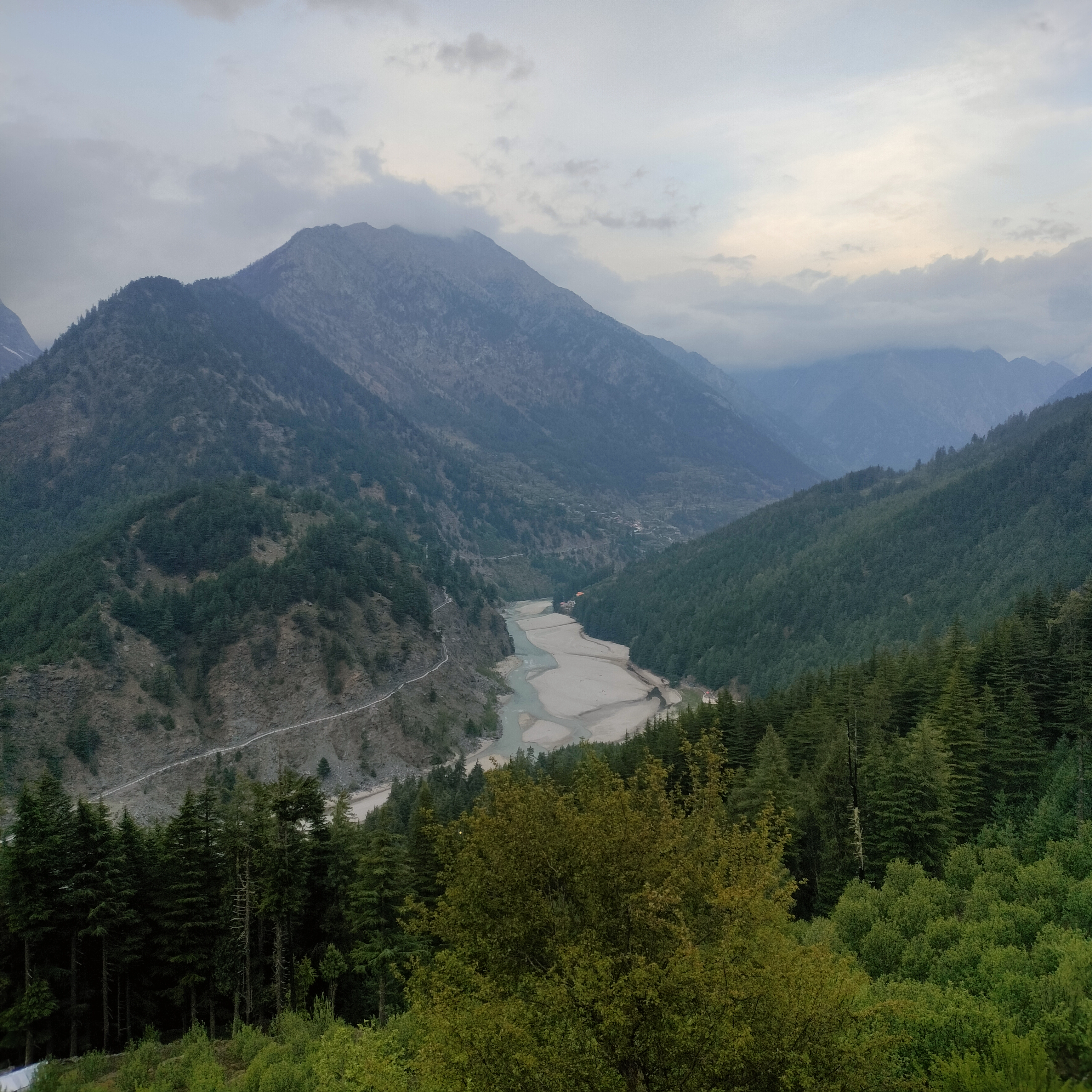
 When I’m near Gaga Ma I somehow go footloose. Walking on Her banks or on the landscapes shaped by Her torrential flow becomes my meditation, my ritual, my tapasya. I just find myself keep walking. The pent-up energies, emotions, karmic entanglements all start flowing as if pushed by Her blessing shove. I just walk. Gently. In a fine flow with myself. No destination. No goal. She does what is supposed to be done; what is needed for Her child’s growth.

This is late April and I’m staying at Dharali. I’m here to walk with Ma Ganga Doli Yatra from Mukwa to Gangotri—the colorful procession starting from Her winter abode to culminate at Her summer home. It’s a soulful procession, full of colors, redolent with local hill people’s unquestionable faith in Ma Ganga. No words can describe the feeling. I walk with them and simply keep looking at Her beautiful, kind, pious face visible through the small opening in the little silver shrine being carried by the bearers. I’m just soaking myself with as much darshan as possible. Plundering the divine prasada actually. Greedily. Copiously.

It’s a lovely little trek lasting about 22 km. When the procession reaches Gangotri, the entire little pilgrimage town lines up to welcome their mother. The place is as good as nonexistent without Her. No wonder it’s abandoned during the winter months when the mother is away at Mukwa.

There is a suspension bridge over Ganga Ma linking Dharali on this side to Mukwa on the opposite hill. During nights I keep walking from this end of the bridge to the other. The hill people usually stay indoors after the dark, so I have the bridge all to myself for meditative walks. It’s a spiritually heady cocktail of elements: the mountain wind rushing through the valley, Ma Ganga’s roar, my seeking self and pristine open starry sky above. All the elements forming a tiny intersection defining my path.

I keep asking people whether they know some real saint to recommend for a meeting. Almost all of them say—with helplessness—that presently it’s all about money, power, authority, perks and privileges; religion is more or less a big business and political tool now; the babas are powerful and do liaisoning work facilitating big interests of powerful people. But when was it not so? The ritualistic part has always engaged with worldly matters more or less on the base frequency.

I’m more into spirituality. Moreover, this is kaliyuga—the age of darkness and expecting satyuga purity in kaliyuga sages would be asking too much. To me it’s pretty simple. Earlier in pure climate you had massive trees lasting centuries; now we have lesser trees struggling to survive in the changed climate. The same is the case with the sages in the changed, degraded social climate. They are also the stunted version of the lofty mythical sages of the ancient times. But at least they are carrying the lineage and deserve respect for that. So I’m not too judgmental and usually try to have satsang with kaliyuga saints.

Mahesh, the gentle and kind hotelier, is a thorough gentleman; always ready to do something for the babas and matajis of the entire area from his place till Gangotri. I ask him about any serious baba. He also says with sadness that it’s all business now. ‘But you can try meeting this avadhuta. But it depends on his mood. Usually he asks the visitors to leave within a couple of minutes or straightaway refuses to meet,’ he tells me.

This babaji stays at the other end of the bridge towards Mukwa. As you emerge on the other end of the bridge, the main steep climb goes to Mukwa up the hill. The baba has a tiny hut of planks and tin fixed against a rockface on the left side a few meters above Ma Ganga’s stream. To reach his ramshackle little gate, one has to walk under the bridge along the bank and cross over to the other side of the bridge’s base.

As I reach the tiny indicator of the start of a human’s domain in free wilderness, I see a stocky figure sitting under a tree on a platform in front of the hut. I gently hark his attention from the gate. He waves his hand asking me to come in. I walk gingerly. I’m extra cautious, full of additional politeness in order not to disturb him. As I come near, with a swift action he throws a small durri piece on a beaten down wooden chair near him. I touch his feet and sit at the chair’s edge with folded hands.

‘I’m sorry if I’m disturbing you swami ji. I just wanted to see you. I simply come as an empty vessel. Ready to accept whatever you bless me with,’ I cautiously approach with respect and acceptance of his graceful presence. He laughs with childlike innocence.

I keep my promise of being an empty vessel and just listen. The baba talks. I’m lucky that he is feeling happy to talk today. He is a Begali baba initiated into Ramakrishna mission. But he found the ashrams too binding and has been on his own for the last six decades, most of which he has spent in this area near Ma Ganga including the last 37 years here at this place. Earlier he was at a cave about one kilometer up the stream for some years and before that at Gangotri.

He speaks with a cute Bangla accent. Quite hale and hearty for his 77 years. The baba is happy to share his life story and even tells me about his family. It’s a nice satsang for an and hour and fifteen minutes. He is quite vocal about a sadhak keeping the vow of celibacy. I have my opinion on this but I know he knows more than me and I must listen to him.

‘O narayan ji, why are you unnecessarily entangled in this worldly maya? Leave it. Quit,’ he says it very naturally like he feels that’s what I should do now. ‘Sit for sadhna. You can sit in my former cave some distance from here. I’ll ask the villagers to help you initially. In any case, what does a sanyasi need? The basic needs are met by mother nature. So you need not worry about that,’ the baba is quite optimistic about me taking full sanyas and abandon all worldly connections.

‘Can’t one achieve peace even while staying in the world with its issues?’ I ask. He says a firm ‘no’ and doesn’t explain it further than this. I have arguments in my talkative mind but I don’t say anything.

Even Kaka Maharaj, who stays outside the village, asked me to abandon everything and sit for sadhna somewhere by the canal in the area where he has been staying for the last many decades. In fact, my brother laughs that I have been offered two penthouses by two babajis. But I know I’m not for complete severance of worldly ties. I’m for a balanced life in all matters. More than that, I believe in reading and writing and that I will do till my last breath. I’m not worried even if that creates situations not conducive to absolute peace. No problem.

‘If you don’t quit, the God will force you to leave all this worldliness, which stops one from enjoying the grace of absolute peace,’ the baba says emphatically. I just clear my throat apologetically.

As I take leave and stoop down to touch his feet, the baba puts his loving, kind hand on my head and gently pats my back saying, ‘Peace be with you! Peace be with you!’ He gives me two apples, a bit stale, dejuiced, somewhat shriveled. Actually all his apples were like that. He isn’t bothered about freshness of fruits. But the fruits are fresh with divine grace.

During our interaction the baba has a firm idea that I’m a bookworm. He opens a bundle of soiled cloth and from the stack of very old books randomly picks a part of an old, dog-eared book. ‘Read it! But reading scriptures is like using a thorn to take out the thorn in one’s flesh. After taking out the thorn both thorns have to be discarded,’ he says. The baba knows the utility and futility of knowledge. He is after all a graduate himself.

There I walk back after hitting the jackpot—satsang with a saint, two apples and an old book about the lamp of knowledge. The rumpled, crumpled book has been thoroughly thumbed; possibly during his former knowledge-seeking days. The thorn of knowledge which he used to pull out the thorn of ignorance. The pages bear extensive markings, underlines, sidenotes and scrawls in Bangla to give me an idea how extensively babaji has gone through this book. He seems to have gone into depths over each world and phrase on the banks of Ganga Ma over the decades. This is a prized catch—in worldly lingo. I might not be able to read it as extensively as the baba but its mere presence among my books is enough to dispel the dark corners of ignorance in my study. It’s enlightening just by its presence. How it can’t be? After all, it has stayed in the hands of such a longtime sadhak who has definitely attained a joyful state. I feel that joyfulness in my head now. A feeling of ease. Palpable. Not many ideas swimming in the brainy pool. Just an emptiness. I feel the grace of his peaceful touch as I walk back.

Yea, missed to tell it. The baba listens with the cute excitement of a child listening to fairy tales. I was telling him the story of a Zen monk and he looked and listened in rapt attention, a childlike smile on his face all along the narration. 

The fulfiller of cosmic will


All this is a little funny innocent thoroughfare around. This creation is just pushing a unique expression through our identity, our point of existence in Her infinite folds. So let’s be proud of what we are doing. Our karma is nothing but a contribution from our end to help the eternal truth in maintaining its sanctity, its mystical depth. So let’s create well in full honesty to our own self. Spool your webs and feel that we are fulfilling a vital part in Her scheme of things.

Each step we take is in fact Her step to realize Her full potential. We are merely an expression of the infinite potential lying at the quantum level to take more and more shapes and expressions. So do your karma in action, thoughts and emotions in full sincerity, with full awareness, with full presence. And you make Her happy, happy about Herself because She is you and you are just a drop in Her vast cosmic sea. She is happy when you are happy. She is sad when you are sad. She feels like a majestic creator when you are consciously creating something in full awareness. And She is right there in you when you are aware of your full presence.

A little message for the traveler


Usually people, most of us, walk through a grey zone of shifting shadows. It’s not totally dark, it’s a mundane journey. Neither too painful, nor joyous one. It leads to a common destination as well. But some people have to walk through a dark cave, you may call it ‘dark night of the soul’. It’s painful involving lots of suffering. Many perish in the folds of darkness. But those who choose to continue, they finally come out and face the brightest dawn, the dawn of the soul in evolutionary terms. Such people are leaders, guides and inspiration just by default. They need not even try to accomplish anything. Just by being there they do goodness. And if they choose to guide fellow human beings, they make good masters.

So remember this, always, as you walk through your dark nights, that you are such a soul. And the patches of darkness will keep arriving periodically till you see the sunshine finally and be an inspiration to others. So keep walking. With a smile. And keep in touch with the people who care for you. Don’t allow the darkness to build more walls around you. Best wishes brothers and sisters!

A little story of selfless love


Here is an inspiring little story of a farmer in the locality.

A poor almost illiterate farmer with a little patch of land. A nice man but into alcohol. His son a very diligent, disciplined and hardworking boy. He did tapasya for medical studies in India. Sadly couldn’t get the admission. His father sold his little plot of land and sent him to Russia for medical studies. The boy is excelling in studies there. The father is slowly dying and fading away but he is peaceful for keeping the HOPE alive in his son’s life. There is a smile on his face even in the face of death.

That’s what life is. If we are lucky we get people who help us in keeping our hopes alive. But even if we are all alone, we have our own SELF to keep the HOPE alive.

Here is another story of Hope.

In the Himalayan villages there are some reports of some village elders willing to go into the forests so that they become prey to the tigers. These are very poor people. A tiger victim’s family gets one million rupees in compensation. But is it only about money? No. It’s about keeping the HOPE alive in their families even if they are no more. So dear friends, just imagine people are ready to even sacrifice their lives to keep the hope alive in their families. Hence, all the rest that one can do to keep the hope alive should be a mere cakewalk.

In celebration of life and living


Good day everyone! Brace up for a lovely day of Karma, learning and smiles. I find it suitable to share the story of Dr Joe Dispenza. I always wondered how come this medicine man turns out to be such a mystic! And here is the cause.

He met an accident at the age of twenty-three, breaking six vertebrae in the spine. Paralyzed. The doctors said the only chance at walking would come after inserting two 12-inch long steel rods along the spine. He said ‘no’ and asked to be discharged from the hospital. For three months he lay on his stomach at his friend's place and reconstructed his spine using creative visualization...step by step...with extreme focus, intention, awareness, being present in the body...and made a new reality using his mind power, by being open to the infinite mind that has all the solutions to all the problems. He got up after three months and simply walked away to glory. He hasn’t had back pain in the last three decades. He says it’s not just about the body; we can heal our life in the same way by recreating better careers, relationships, everything in fact.

Wish you all a happy refabrication of life!

Wednesday, May 7, 2025

A mason's dharma


He is a middle-aged man, stocky, solid, graying with wisdom of experience and hard work. His nicely curling moustache on his weather-worn face seems to justifiably boast a life well-lived with honesty, hard work, integrity and discipline. Equipped with this impression on me, Fauji mistri visits me.

When you are born in a so-called lower caste, it’s like beginning with a huge deficit, disadvantages piling up over the generations to hold your head low, grounded, non-assertive, humble, cringing. It’s like being born under the water. Right from the first instant you are aware that you have to at least come gasping onto the surface to survive and then struggle to reach the shore and then begin your journey from where most of the humans take their first steps after getting born in better caste hierarchy. You start with a big minus and even to reach zero takes the major part of one’s life, and if you achieve that, it would make you feel successful. All around you people are born with multiple of pluses, a launchpad for them to shoot out into the sky. You are meantime laboring on the ground, merely spading the dirt, while they go and grab the stars.

Fauji mistri started as a mason. He worked very hard, honestly raising his family. Then migrant Bihari bricklayers started to arrive, looking for better options among the endless private and public construction going on. Individually they don’t feel safe in working on the construction sites because many people would chuck out the wages of a migrant worker. So they tie-up with a local contractor who gets them work and ensures payment, keeping a commissioned amount for himself. So Fauji turned a contractor as well. All this while he has been working himself as well.

He visits me and appears to be seeking some solace. He looks disappointed, hurt, stressed and downcast. I don’t ask him the reasons for his feeling so low. They are bound to be the same old stories of hurt, complaints, anger, cheatings. I’m not interested in the repetition of these stories. All of us know them too well. I feel he seems to have lost faith in his mason dharma of hard work. There must have been reasons. But one’s faith ought to be restored.

‘It’s a reverse world. What appears solid is a shadow. Those whom you feel are prosperous are maybe unlucky because the majority of them are earning money through unjustified means. And following a fake path can never take one to truth. So maybe they are unlucky and have been penalized for their past sins to be born among circumstances where there is a lot of unjustified prosperity. And those who look struggling maybe are the lucky ones, blessed by God to be given a path that requires them to an honest, hard-worked life, every penny earned through blood and sweat. As Jesus said those who seem standing last here will be standing first there. Since you dig a well daily to see through the day, you have to believe that you are very dear to God. He has put you on a path that will see your soul marching nearer and nearer to truth. You will realize and feel it at the end of this journey. You don’t need pilgrimages, rituals, fasting, meditations, charity to pursue your will to be dearer to God. You already are. You worship Him with each brick that you lay with your hardworking soul. You already follow all the rituals in spreading cement to make solid walls. You light up incense in erecting roof over people’s heads. You have your own dharma of sweat and blood, your temple, your own priest, your own scripture. You don’t need any guru to be guided to a nobler path. You already are all that it requires to be a human being dear to God. Just remember your dharma with each brick that you lay to erect a wall. Don’t forget it. And it will always maintain a smile on your face,’ I told him.

Fauji mistri smiled and looked vastly comforted. Well, at least that much you can do. You can help people in retaining their faith.

The monkeys of Delhi


The rest of the species have meekly caved in under the human pressure. But the rhesus macaque monkey holds the baton of rebellion with its red face and pink bottom. It’s now classified as an urban animal by the Delhi Forest and Wildlife Department. It’s now the MCD’s duty to manage the simian problem just like they handle cats and dogs problems. As urban animals the rhesus monkeys can no longer hide under the protective umbrella of the Wildlife Protection Act.

However, they continue to enjoy respect under the mythological laws for being part of Lord Rama’s army in his fight against Ravan. The MCD (municipal corporation of Delhi) is sprucing up its monkey-catching drive by recruiting more monkey catchers. Despite paying an impressive INR 2500/monkey catch, the national capital has only ten monkey catchers.

The already smart monkey is even smarter now, shrewd and clever in fact. They know better than grabbing bananas from the trap cages. This much brain they possess. In any case there are millions of devout Hanuman followers who have enough bananas for them to avoid visiting the trap cages.

It was in 2007 when angry monkeys claimed a VIP casualty. The deputy mayor was attacked on his terrace. He fell from the roof and died of injuries.

Presently the MCD captures them and dumps them in Asola Bhatti region. But the Tughlakabad forest area hasn’t any boundaries. The rhesus loves its genetic look-alike and returns within a short span of time. The resident welfare associations demand sterilization to check their population. But who is to ordain human sterilization to checkmate our ever-increasing population?

The mother


She is a widow pensioner in her late sixties. Her husband who was in police expired long ago. She successfully raised two boys and a girl. It was challenging as usually it is. She lost her daughter to dowry sharks. It was a huge trauma. Both her boys are settled with their families now. She stays with the younger one. There was a time when he was struggling with his small business. During those times her pension was handy for the family budget. Economic dependence fetches its fair share of loyalty and obedience on part of the dependent to the benefactor. So he was a sweet boy, caring with his tongue when it came to dealing with his mother. Then his small business picked up and he turned moderately well off. Now he was no longer dependent upon the contribution of her small pension in running the household.

What can a mother expect from a self-sustaining boy? He wasn’t directly insulting but due to his newfound economic independence she felt him to be dismissive of her. It pained her. She shares this sadly with me. Now she has to be reminded that it hasn’t gone waste, her struggle and support.

‘Sweet, sugar-coted, flattering words of an economically dependent boy are far lower than the practical, matter-of-fact, official sounding, formal words of an independent self-sustaining boy. As a mother what would you choose? A boy who speaks sweetly just because he is dependent on your pension to run his affairs. Or a boy who sounds dismissive of you but is respectfully earning his bread.

‘The latter,’ she replies.

‘As a mother what was your duty? It was to help him grow up. His speaking over you is a sign of his growing up to be independent. Which mother would want a cringing dependent son? So sister, feel happy and proud that you have raised a man who is standing on his own now. Growing old is being transparent, mellow, adjusting and understanding. Most of the unwanted stuff ought to pass through you without getting stuck up and create pain inside. Listen and smile and keep blessing your children,’ I try to assure her of the wisdom of old age.

A smile comes on her face. She now feels the joy of raising independent sons. 

Smartphone solace in solitude


The sun at its baking best on this June noon. Who would come out in such fire unless forced by the circumstances ?But a writer needs to accede to his whims sometimes. My head draped in a towel, I’m walking on the canal embankment. The water seems vaporizing right there while on its course. The grass and bushes almost famished. The trees dispirited. The birds silent, probably taking a siesta. A little flock of sheep is grazing on the sunburnt tufts of grass. The sheep in their woolen coats look like an old man draped in a thick military blanket on a June noon. They look suffering under their coats. But during the winters it makes them look so comfortable and warm.

A sheep is startled to see someone out in such heat. The shepherd is lying under the not-so-dense shade of a small tree. Far away from the world. He is a poor boy in shabby clothes. But he has a smartphone. The panacea for all your vacuums. The world is at your fingertips. You don’t need anyone. You easefully pass time from the airport lounges to the faraway places such as this one. Virtual socializing consoles us in this lonelier than ever world. Beyond all the cacophony, we are lonelier than ever. The smartphone is a faithful companion to the billions of lonely humans.

Monday, May 5, 2025

A visit to Delhi


I visit Delhi only when it’s unavoidable. Despite innumerable new bridges and flyovers, traffic congestion and pollution is almost the same from as long as I can remember. The reason is thousands of new migrants and scores of new vehicles on the road every week. The national capital is a sufferer of over-expectations. Urban planning will be better with diversification of focus on smaller cities and towns.

On a recent trip to the national capital, something interesting caught my attention. There was something written at the back of a car of some senior government official. On the road it moves like a stern disciplinarian message. The people mind their driving business well and follow the rules in the vicinity of such a vehicle. I think a cool proportion of drivers on the road are illiterate. But even they understand the pictographic meaning of these red words.

One such vehicle moved in front of my car. I’m already cautious while driving but I turn extra-disciplined now. Then on second reflection I read it again. ‘Great of India’. Well, it looks the same to even those who can read. We are used to read it as ‘Government of India’ and get extra disciplined when driving near it. While, the illiterate ones would give it the same guard of honor as to any official vehicle. The white ‘Great of India’ Swift Dezire moved with honor among the motley crowd. Many drivers gave it space to overtake to allow the high government functionary to reach his destination on time.

World cycling day


I never knew there was a world cycling day falling on June 3. I came to know of its existence through a pleasant coincidence. We had once bought a very nice bicycle for my niece. But she turns out to be unsporty type. The bicycle rusted on the roof. Then my nephew came of age, the time when six or seven years olds fall in love with cycling. Thinking he would love it we sent it to a mechanic, getting it totally refurbished. It looked well-oiled and properly greased to pedal a childhood to joyful glory. But even seven-year-old Nevaan, coming during his school vacations, hardly showed any interest in it.

Stationed in the verandah, I again saw the signs of rust gathering on the lovely cycle. That sounded so derogatory to a cycle, especially when there are so many children who would lose their sleep out of sheer excitement if they get a cycle like that.

There are two little boys from a needy family in the locality. I gifted the cycle to them. In the evening of the same day, the sultry silence was broken by a sweet trilling by the familiar bell. The elder one rode, the younger one riding pillion, there they went sashaying across the streets, their dreams on swift pedals. A few moments later, through the ever nosy social media, I came to know that it was the world cycling day! What a beautiful coincidence?

May musings -- 2024


The month of May was unexpectedly cooler. The coolest May in the last four decades in fact, thanks to the western disturbances. But the heat will put up its grip in June, the loos will sigh, the sands will fly, the street dogs will walk with their tongues hanging out, the flowers will get charred and vanish (except peregrina). The deep red little flowers stay through the year, except for the coldest moth in January. But the sadabahars also are quite brave. They aren’t bothered about winters and summers.

The curry leaf tree is in full bloom. Smallness is no handicap for smiles. These are little bouquets with tiny white petals. They are so small that you see them only as a pale collectivity from a distance. They have a faint jasmine kind fragrance. They are countless like ants. So many drizzle like a mango tree’s flowering. Yet there are so many left to invite an entire colony of bees to feast through the day. Big yellow-brown stinging wasps also drone among the clusters. To have your stinginess you need to have some sweet core inside. Purple black berries would form later. They taste sweet. I remember the Morni hills trekking times when a huge curry leaf tree would welcome the solitary walker and offer its ripe, sweet berries.